


Is Dermaplaning Good for Your Skin? Benefits, Risks and Aftercare
Could a treatment that leaves your skin feeling smoother still be the wrong choice for your complexion? If you’re wondering, “is dermaplaning good for your skin?”, the answer depends on your skin’s condition and what you hope to achieve. Dermaplaning may remove superficial dead skin cells and fine facial hair, leaving skin feeling softer and looking brighter, but it won’t address every concern or suit everyone.
Questions about irritation, breakouts and whether facial hair grows back thicker are understandable. Dermaplaning doesn’t change the hair’s natural texture or growth pattern, although temporary sensitivity can occur. Active acne or certain skin conditions may also affect suitability. This guide explains the realistic benefits and limitations, who may benefit, what to discuss before treatment and how to approach aftercare. At Nefretiti Laser Clinic & Aesthetics in Elm Park, Hornchurch, a free initial consultation and required patch test form part of the process before dermaplaning.
Table of Contents
Is dermaplaning good for your skin? What the treatment can do
How dermaplaning works, and what happens to fine facial hair
Who may suit dermaplaning, and when should skin be assessed first?
Preparing for dermaplaning: questions, treatment planning and aftercare
Considering dermaplaning in Elm Park or Hornchurch? Choose an informed next step
Is dermaplaning good for your skin? What the treatment can do
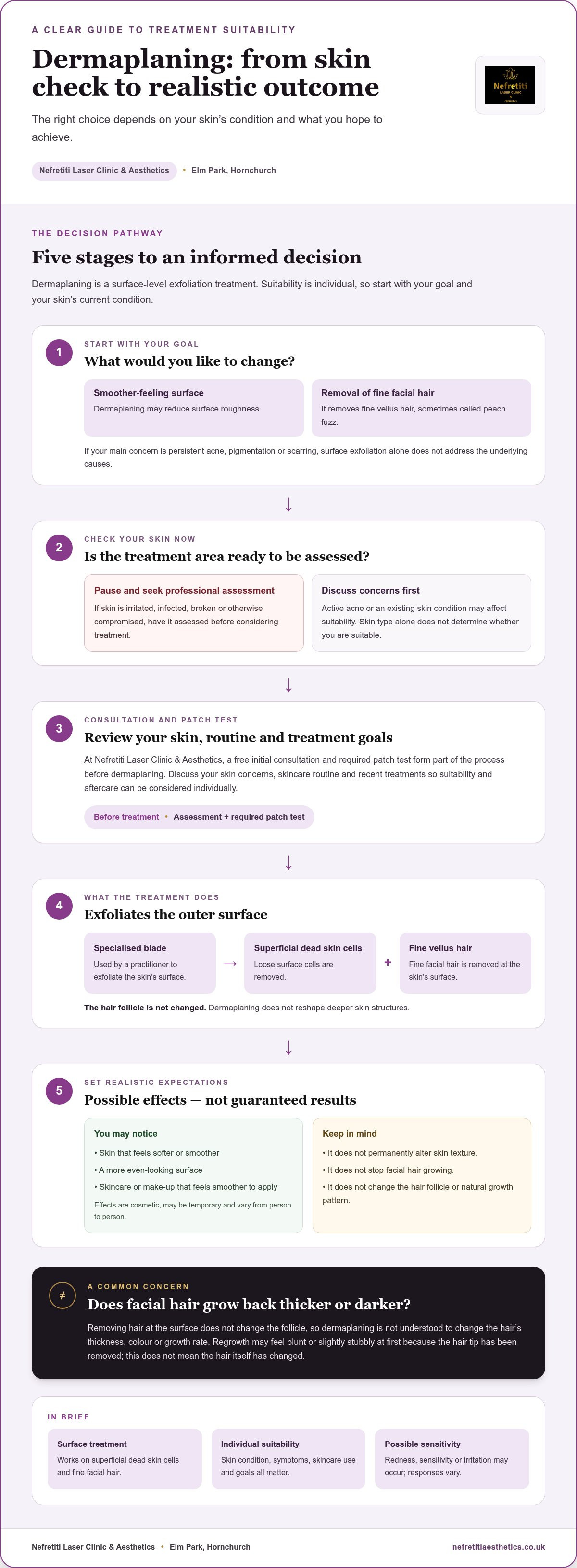
Dermaplaning may suit people looking for a smoother-feeling skin surface, but its benefits and suitability vary. This professional exfoliation treatment uses a specialised blade to remove superficial dead skin cells and fine vellus hair, sometimes called peach fuzz. It offers a temporary cosmetic refresh, not a lasting transformation or a solution for every skin concern.
So, is dermaplaning good for your skin? It may be worth considering if your main goal is to reduce surface roughness or remove fine facial hair. The result depends on your skin and its current condition. A consultation can help establish whether this kind of exfoliation is appropriate for you.
What does dermaplaning do to the skin’s surface?
Dermaplaning works at the outer surface, removing loose, superficial dead skin cells along with fine facial hair. Skin may feel smoother afterwards, but the effect can be temporary as the skin naturally renews itself.
It is different from treatments intended to address concerns beneath the surface. Dermaplaning doesn’t reshape deeper skin structures or, on its own, treat the underlying causes of persistent acne, pigmentation or scarring. A broader overview of the Dermaplaning process explains its place within exfoliation. The right approach depends on the concern you want to address.
What benefits might someone notice after dermaplaning?
Some people notice a softer feel or a more even-looking surface after treatment. Removing fine hair and surface build-up may make skincare or make-up feel smoother to apply. These are possible cosmetic effects, not assured outcomes, and how long any change is noticeable varies from person to person.
Keep your expectations specific. Dermaplaning may support a fresh-feeling complexion, but it won’t permanently alter skin texture or stop facial hair growing. If your priority is a persistent skin concern, discuss it during an assessment rather than assuming surface exfoliation will address it.
Nefretiti Laser Clinic & Aesthetics offers dermaplaning in Elm Park, Hornchurch, following a free initial consultation and a required patch test. These steps provide an opportunity to discuss your skin and goals before deciding whether to proceed. You can explore the clinic’s beauty and aesthetic treatments in Essex.
How dermaplaning works, and what happens to fine facial hair
During professional dermaplaning, a practitioner uses a specialised blade to exfoliate the skin’s surface and remove fine vellus hair. The treatment acts on the outer layer, rather than the hair follicle beneath it. The approach should be guided by an assessment of your skin and its suitability for exfoliation.
Removing hair at the skin’s surface does not, by itself, change the follicle or alter how the hair grows. Dermaplaning is therefore not expected to make fine facial hair grow back thicker, darker or faster. The Cleveland Clinic’s overview of dermaplaning benefits and risks also explains the treatment and what to expect.
Does dermaplaning make facial hair grow back thicker or darker?
Generally, no. Removing hair at the surface doesn’t change the follicle that produces it, so dermaplaning isn’t understood to change the hair’s thickness, colour or growth rate. A cut hair may initially feel blunt or slightly stubbly as it grows back because its tip has been removed. That sensation can make regrowth seem different, but it doesn’t mean the hair itself has changed.
Natural hair patterns vary, and people may notice their facial hair differently over time. If you’re concerned about a change in facial hair, don’t assume dermaplaning is the cause. Discuss the change with a suitably qualified health professional.
How is dermaplaning different from other exfoliation treatments?
Dermaplaning physically exfoliates the surface and removes fine hair. Chemical exfoliation uses ingredients to loosen or shed surface cells instead. The methods differ in technique and suitability, so one isn’t automatically better for everyone. The appropriate option depends on your skin, its current condition and your goals.
If you’re comparing dermaplaning with other skin treatments, Nefretiti Laser Clinic & Aesthetics offers chemical peels, microneedling and HydraFacial as well as dermaplaning. The question “is dermaplaning good for your skin?” is best answered by weighing the surface-level effect you want against how your skin may respond. A free initial consultation at the Elm Park, Hornchurch clinic gives you a chance to discuss your goals and skin history before deciding whether treatment is suitable.
Who may suit dermaplaning, and when should skin be assessed first?
Dermaplaning may suit someone seeking surface exfoliation, but no single skin type automatically makes someone a suitable candidate. Your skin’s condition, current symptoms, skincare use and treatment goals all matter. An individual assessment can help establish whether the procedure is appropriate now or whether it’s better to pause and seek advice first.
If you’re asking, “is dermaplaning good for your skin?”, consider both the cosmetic aim and the possibility of a temporary reaction. Some people experience redness, sensitivity or irritation after treatment. These effects may be short-lived, but individual responses vary. A useful overview of what dermaplaning involves can explain the procedure, but it can’t determine your personal suitability.
Which skin concerns call for professional advice first?
Pause treatment and seek professional assessment if the area is irritated, infected, broken or otherwise compromised. Active acne or an existing skin condition doesn’t automatically rule out treatment, but its nature, severity and current state should be considered individually. If symptoms are persistent, worsening or unclear, get appropriate advice before booking an exfoliating treatment. Mention recent flare-ups and any products that may be affecting your skin.
What side effects and limitations should you understand?
Even when treatment is suitable, your skin may feel more sensitive or look temporarily red or irritated after exfoliation. If symptoms are pronounced, persist or concern you, seek appropriate advice rather than repeating treatment. A consultation gives you the opportunity to discuss likely considerations and decide whether proceeding feels right for you.
Dermaplaning is cosmetic exfoliation. It may affect how the skin’s surface feels or looks, but it doesn’t cure acne, pigmentation or other skin conditions, and may not address their underlying causes. Results vary, and no particular outcome can be promised. If your main concern is an ongoing skin condition, make that the focus of your assessment rather than assuming surface exfoliation is the answer.
At Nefretiti Laser Clinic & Aesthetics in Elm Park, Hornchurch, the free initial consultation is an opportunity to discuss your goals, skin history and current concerns. A patch test is required for every treatment at the clinic. These steps help inform a considered decision about dermaplaning, subject to suitability.
Preparing for dermaplaning: questions, treatment planning and aftercare
Good preparation starts with an honest conversation about your skin, not a one-size-fits-all checklist. Information about your skin’s current condition, your goals and your usual routine helps the practitioner consider whether dermaplaning is appropriate and how to plan it. If your skin changes before your appointment, let the clinic know so your suitability can be reviewed.
What should you discuss before a dermaplaning appointment?
Explain what you hope to achieve, such as a smoother-feeling surface, and mention any sensitivities or reactions you’ve experienced. Tell the practitioner about current irritation, broken skin or other concerns, even if they seem minor. Share the skincare products you use and any recent skin treatments, as these details may be relevant when considering how your skin could respond.
Ask what dermaplaning can realistically address, what it won’t change and what signs might mean it’s better to postpone. The answer to “is dermaplaning good for your skin?” depends partly on these individual factors. At Nefretiti Laser Clinic & Aesthetics, the process includes a free initial consultation and a required patch test for every treatment. Use the consultation to raise your concerns and ask how the patch test fits into the clinic’s treatment process.
Discuss timing with the treatment professional, particularly if your skin is unsettled or you’re using products that may affect its sensitivity. Don’t make changes to your skincare routine based only on general online advice. Ask for guidance that takes your circumstances into account.
What aftercare should you follow after dermaplaning?
Follow the clinic’s specific aftercare instructions, as suitable guidance can depend on your skin and how it responds. Handle the treated area gently and avoid adding products or treatments unless they’re consistent with the practitioner’s advice. If you’re unsure whether your usual skincare is suitable immediately afterwards, ask the practitioner rather than guessing.
Temporary sensitivity or redness may occur, but reactions differ. If you notice an unexpected response, or symptoms persist or worsen, seek professional advice. Don’t repeat exfoliation or try to manage a reaction with additional products without guidance. Clear aftercare advice helps you understand what to expect and when to raise a concern.
Considering dermaplaning in Elm Park or Hornchurch? Choose an informed next step
Dermaplaning may appeal if you’re looking for a smoother-feeling skin surface, but weigh that potential benefit against your skin’s current condition and individual suitability. It’s a cosmetic treatment with specific limits, so an informed conversation is more useful than assuming it’s right for everyone.
How can a consultation help you decide if dermaplaning is right for you?
A consultation gives you space to explain what you’d like to address, describe current skin concerns and discuss relevant skincare use. This helps inform whether dermaplaning is appropriate and whether your goals match what surface exfoliation may achieve. If your skin is unsettled or your concern is unclear, raise that before making a treatment decision.
At Nefretiti Laser Clinic & Aesthetics, the free initial consultation and required patch test form part of the client process. They support a considered discussion before treatment, which remains subject to suitability. Results vary, and a consultation can help set realistic expectations without promising a particular outcome.
Ultimately, “is dermaplaning good for your skin?” is a personal question. If your aim is a temporary surface-smoothing effect and your skin is suitable, it may be worth discussing. If you’re hoping to address a persistent skin concern, make that the focus of your assessment so the next step reflects your needs.
Where can local readers explore skin treatment options?
Nefretiti Laser Clinic & Aesthetics offers dermaplaning in Elm Park, Hornchurch. The clinic welcomes clients from Romford, Upminster, Rainham, Dagenham, Gidea Park, Harold Wood, Harold Hill, Brentwood, Essex and East London. Its wider treatment menu includes Laser Hair Removal, Laser Tattoo Removal, Carbon Laser Facial and IPL skin treatments, alongside other aesthetic services. Explore the clinic’s aesthetic treatments in Essex.
Take your time, share your concerns openly and make a decision that feels right for your skin. A consultation is an opportunity to ask questions and understand whether dermaplaning may be suitable for you.
Make an informed choice for your skin
Dermaplaning may leave the skin feeling smoother, but it’s a cosmetic treatment, not a fix for every concern. Whether dermaplaning is good for your skin depends on your goals, your skin’s current condition and an individual suitability assessment. Fine facial hair isn’t expected to grow back thicker because it’s removed at the surface, although temporary sensitivity or irritation can occur.
Nefretiti Laser Clinic & Aesthetics offers dermaplaning in Elm Park, Hornchurch. A free initial consultation gives you time to discuss your skin and expectations, and a patch test is required for every treatment. Results vary, so use the opportunity to ask questions and decide calmly whether to proceed.
A thoughtful, personalised approach can help you feel more confident about your next step.
Frequently Asked Questions
Is dermaplaning good for sensitive skin?
It may be suitable for some people with sensitive skin, but sensitivity can also increase the chance of discomfort or temporary irritation. Suitability depends on your skin’s condition and history, not simply its type. Discuss previous reactions, current symptoms and skincare products during an assessment. At Nefretiti Laser Clinic & Aesthetics, a free initial consultation and required patch test form part of the process before treatment.
Does dermaplaning make facial hair grow back thicker?
No. Removing fine hair at the surface doesn’t change its follicle, so dermaplaning isn’t understood to make hair grow back thicker, darker or faster. As short hairs emerge, their cut ends can feel blunt before they soften, which may make regrowth seem different. Natural facial hair patterns vary. If you notice a persistent or unexpected change, seek appropriate advice rather than assuming the treatment caused it.
Can dermaplaning cause spots or breakouts?
Some people may experience temporary irritation or bumps after exfoliation, but a breakout isn’t inevitable. Individual responses and skin condition matter, and treatment over active or inflamed areas may be unsuitable. Follow the practitioner’s aftercare instructions and avoid adding products or exfoliation without guidance. If spots are persistent, worsening or unusual for you, seek professional advice before arranging further treatment.
What does dermaplaning do to your skin?
Dermaplaning exfoliates the skin’s surface, removing superficial dead skin cells and fine vellus hair. Skin may feel smoother and look more even afterwards, but results vary and are cosmetic rather than permanent. It doesn’t treat the underlying causes of conditions such as acne or pigmentation. Whether dermaplaning is good for your skin depends on your goals, current skin condition and individual suitability.
How often should you have dermaplaning?
There isn’t one suitable interval for everyone. How often to consider treatment depends on your skin’s response, its condition and your goals. Avoid booking repeated sessions based only on a general online schedule. Discuss timing with a treatment professional who can assess your skin and advise whether another session may be appropriate. If your skin is still irritated or unsettled, seek advice before arranging further exfoliation.
Can you wear make-up after dermaplaning?
Follow the aftercare instructions given by your practitioner, as advice may depend on your skin’s response. Your skin may be temporarily sensitive after exfoliation, so ask when it’s appropriate to apply make-up and which products to use. Avoid anything that causes discomfort, and don’t use make-up to cover a reaction that concerns you. If redness or irritation persists or worsens, seek professional advice.
Is dermaplaning safe if you have acne or irritated skin?
It may not be appropriate to treat skin that’s actively irritated, broken or inflamed. Acne doesn’t automatically determine suitability, but active breakouts should be discussed during an assessment before treatment is considered. If symptoms are persistent, worsening or unclear, seek professional advice first. A personalised consultation can help establish whether dermaplaning is suitable now or whether it’s better to postpone.
For a personalised conversation about your skin and whether dermaplaning may be suitable, book a consultation with Nefretiti Laser Clinic & Aesthetics.


Comments