


Tattoo removal: how laser treatment works and feels
A laser doesn’t clear a tattoo in one go; treatment works gradually as the body breaks down the ink. If you’re wondering what to expect during tattoo removal, sessions at Nefretiti Laser Clinic & Aesthetics usually take around 20 minutes per treatment area, and patients may need between 6 and 12 sessions depending on the tattoo’s colour, size and placement. Treatments are typically spaced about six to eight weeks apart.
It’s understandable to want a clear idea of discomfort, recovery and the commitment involved before deciding. The number of sessions varies, and laser pulses can feel intense, although treatment itself may be brief.
This guide explains how laser treatment targets tattoo ink, which features can make a tattoo harder to fade, and how sessions are planned. You’ll also learn what the sensation and healing period may be like, how to prepare and care for your skin, and how laser removal compares with other methods. This can help you consider the process with a clearer understanding of what lies ahead.
Table of Contents
What helps reduce pain during tattoo laser treatment?
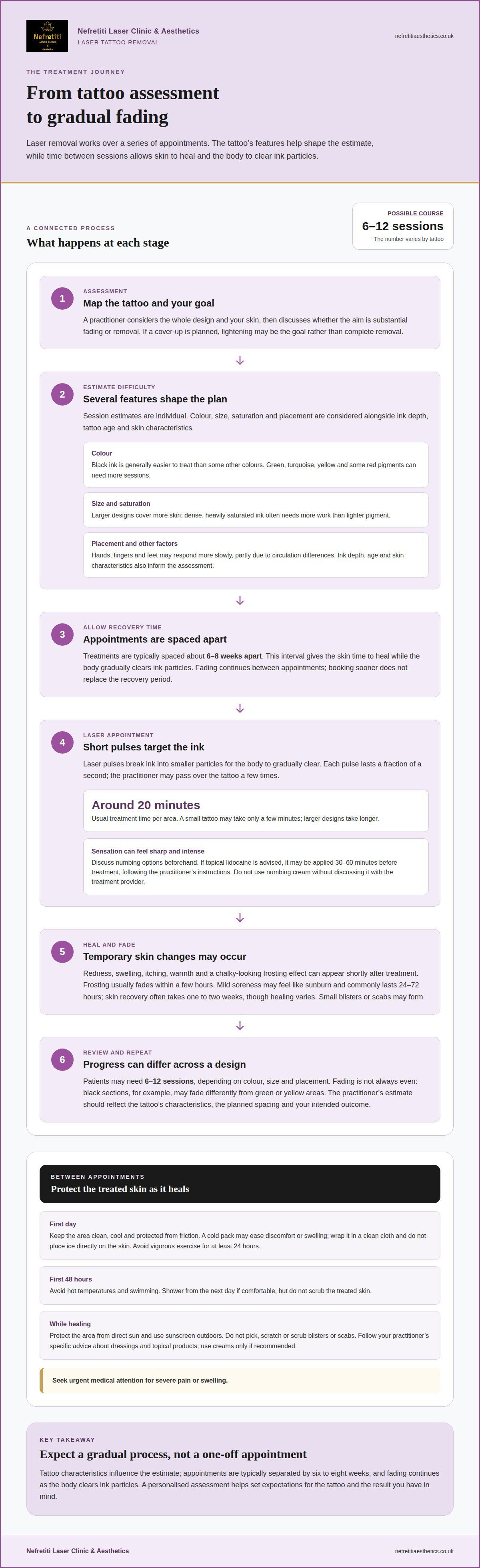
Laser pulses last a fraction of a second, but the sensation can feel sharp and intense. A small tattoo may need only a brief treatment, while sensitive areas can feel more uncomfortable. Ribs, hands, feet and ankles often have thinner skin and more nerve endings than fleshier areas. Discuss numbing options before treatment. If topical lidocaine is advised, it may be applied 30-60 minutes beforehand, following the product and practitioner’s instructions. Don’t apply numbing cream without first discussing it with the treatment provider.
Laser tattoo removal isn’t surgery, but temporary skin reactions are possible. Redness, swelling, itching, warmth and a chalky-looking frosting effect can appear shortly after treatment. Frosting usually fades within a few hours. Cold packs may ease discomfort and swelling during the first day. Wrap them in a clean cloth rather than placing ice directly on treated skin.
During the first 24 hours, the area may remain red and swollen. Mild soreness can feel similar to sunburn and commonly lasts 24-72 hours. Skin recovery often takes one to two weeks, although healing varies. Small blisters or scabs may form. Don’t pick, scratch or scrub them, as damaging healing skin can increase the risk of scarring.
Practical aftercare helps protect the treated area as it settles. Follow the specific instructions provided after treatment, including any advice about dressings or topical products. Common precautions include:
Keep the area clean, cool and protected from friction; loose clothing can help.
Use a cold pack during the first day if needed, with a cloth between it and your skin.
Avoid vigorous exercise for at least 24 hours, and hot temperatures and swimming for 48 hours.
Shower from the next day if comfortable, but don’t scrub the treated skin.
Protect the area from direct sun while it heals, using sunscreen when outdoors.
Sun exposure can increase pigmentation risks, so protection matters throughout healing. Don’t apply antibiotic ointment, hydrocortisone or other creams unless your practitioner recommends them. Seek urgent medical attention for severe pain or swelling. For readers considering treatment in Essex, aesthetic treatments in Essex provide local context for exploring suitable options. Careful aftercare can make recovery more manageable, but it cannot remove every possible side effect.
Estimating treatment difficulty and likely sessions
Each session usually takes around 20 minutes per treatment area. A small tattoo may take only a few minutes, while larger designs take longer.
Factors affecting treatment difficulty
Treatment difficulty describes how readily a tattoo’s ink responds to laser sessions, which influences the treatment plan. Size matters because a larger design covers more skin, while dense, heavily saturated ink often needs more work than lighter pigment.
Colour and placement also affect the estimate. Black ink is generally easier to treat than some other colours; green, turquoise, yellow and some red pigments can need more sessions. Hands, fingers and feet may respond more slowly, partly because of differences in circulation. Ink depth, age and skin characteristics also inform the assessment.
Session spacing and expectations
Session spacing is the recovery interval between appointments, allowing the skin to heal while the body clears ink particles. Treatments are typically spaced about six to eight weeks apart. Booking too soon doesn’t replace this recovery period, and fading continues gradually between appointments.
Progress isn’t always even across a design. For example, black sections may fade differently from green or yellow areas. A cover-up can also change the goal: complete removal may not be necessary if the tattoo only needs lightening. Discuss your intended outcome during planning, so the estimate reflects whether you want substantial fading or removal.
Treatment duration and session numbers
The number of appointments and the time needed at each visit are separate estimates. Patients may need between 6 and 12 sessions, depending on colour, size and placement. A small design can take only a few minutes during one appointment, while a larger treatment area takes longer.
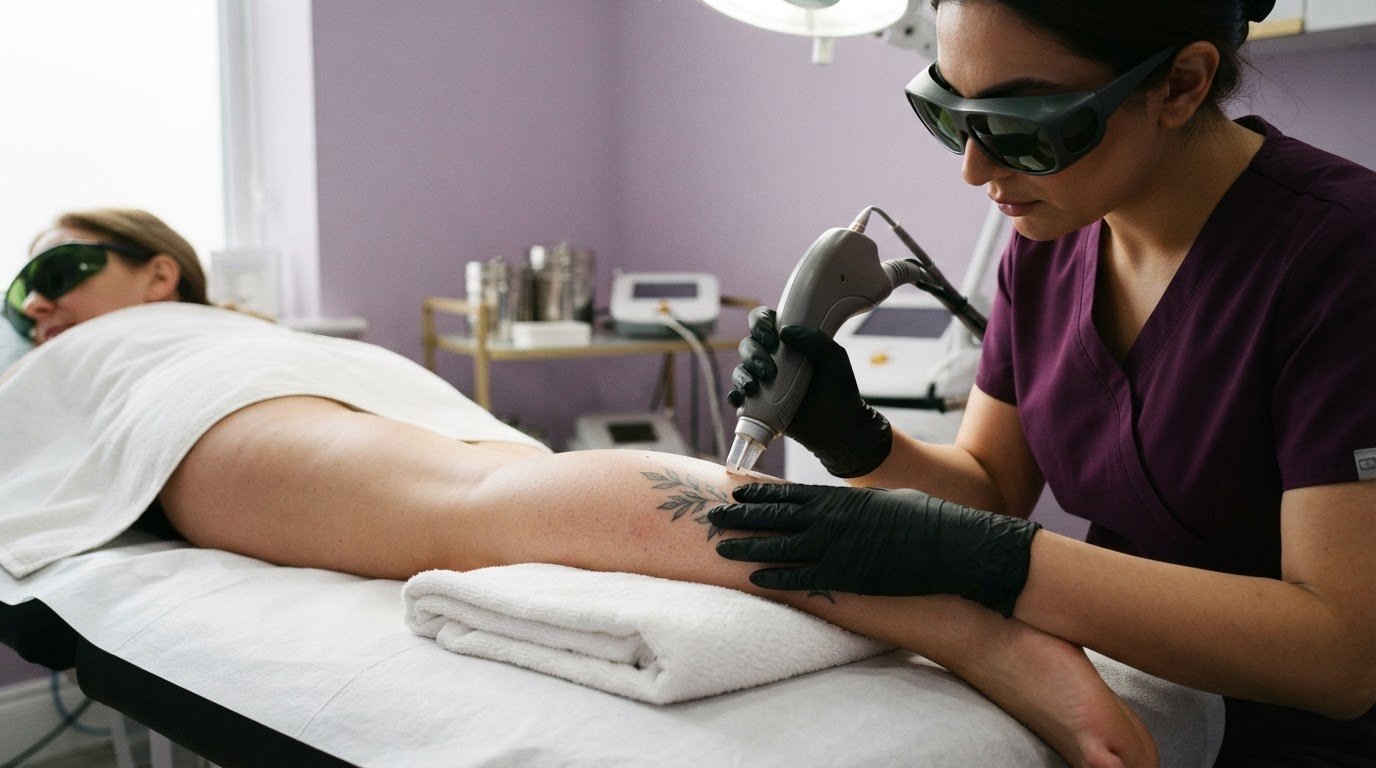
During a session, the practitioner directs laser pulses over the tattoo, sometimes passing over it a few times. Each pulse lasts a fraction of a second. The laser breaks ink into smaller particles, which the body gradually clears. Treatment itself may be brief, but a full course extends across multiple appointments and healing intervals.
For a realistic estimate, the practitioner considers the whole tattoo, not just its colour. A dense, multi-coloured design on a hand, for instance, combines several factors that can affect fading. An older, lightly pigmented black tattoo may present different considerations. These examples show why one person’s session count can’t reliably predict another’s.
Use the consultation to discuss the areas you want treated and whether lightening or removal is your aim. A tailored estimate can then account for the tattoo’s characteristics and planned spacing. To arrange an assessment, book a tattoo removal consultation.
How laser tattoo removal works
Laser tattoo removal uses short pulses of light to target ink beneath the skin. Understanding what to expect during tattoo removal starts with knowing that fading develops gradually, not during a single appointment.
How laser breaks down tattoo ink
The laser’s high-intensity light targets ink particles in different skin layers, breaking them into smaller fragments. Your body then gradually absorbs and clears those fragments, so fading continues after treatment rather than happening instantly.
Ink colour affects how it responds to light. Blue and black pigments absorb laser light effectively and often respond well. Green, turquoise, yellow and some red pigments can be more challenging, so different colours within one tattoo may fade at different rates.
Personalised settings and treatment progression
Personalised treatment planning means considering the tattoo and your skin before selecting an approach. The practitioner assesses the ink’s colour, density and depth, along with its location and your skin characteristics. These details matter because heavily saturated designs can need more work than lightly pigmented ink.
Progress is assessed across removal sessions rather than immediately after a pulse. As the body clears fragmented ink, the tattoo may gradually look lighter. The remaining pigment and your skin’s response help inform how treatment progresses at later appointments.
The first laser treatment appointment
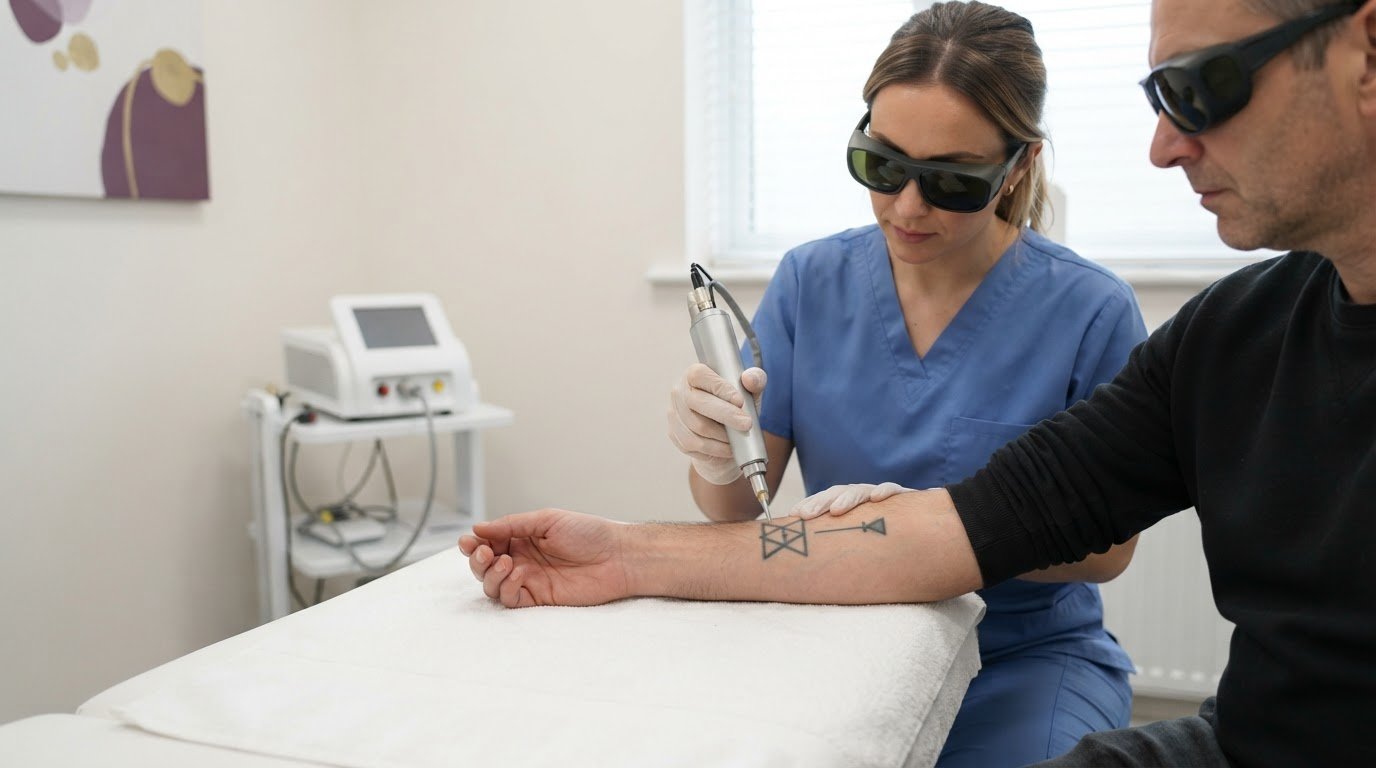
At the appointment, the practitioner positions the laser over the tattoo and delivers brief pulses. Each pulse lasts a fraction of a second. The practitioner may pass over the design a few times, treating the ink within its boundaries.
People often describe the sensation as sharp or intense. A session can be brief, but the sensation varies by person and treatment area. The treated ink may develop a temporary chalky frosting effect, which usually fades within a few hours.
Effects on surrounding skin
Laser energy targets tattoo pigment, but the surrounding skin can still react. Redness, swelling, warmth, itching or blistering may occur after treatment. Temporary frosting is another possible response; it doesn’t mean the tattoo has disappeared during the appointment.
Skin colour may temporarily become lighter or darker, and scarring is possible. Follow the practitioner’s aftercare instructions, avoid picking at blisters or scabs, and report unexpected changes promptly. These reactions are part of what to expect during tattoo removal, although everyone’s skin responds differently.
The body needs time to clear fragmented ink, so visible fading develops gradually. For example, a black section may respond differently from a yellow section in the same design. Laser treatment can also lighten a tattoo without removing it completely, which may suit someone planning a cover-up. Agreeing on the desired degree of fading helps shape a treatment plan around your priorities.
Initial consultation and treatment planning
A consultation establishes whether the tattoo and your skin are suitable for laser treatment. It also sets a clear goal, such as fading ink for a cover-up or aiming for greater removal.
Consultation and treatment goals
The practitioner assesses the tattoo’s colour, density, depth and location, along with your skin condition and relevant health information. These details help shape a realistic plan and identify factors that could affect suitability.
Be clear about your intended result. Lightening a design for a cover-up can require a different approach from seeking substantial removal. Redness, swelling, itching or temporary frosting can occur immediately after treatment. Discuss likely side effects, aftercare and numbing options before deciding to proceed.
Treatment costs and insurance
The cost depends on the tattoo’s size, colours, placement and the treatment plan. It is provided after a quote request, rather than estimated from a general price range. A treatment price list can help you understand how pricing information is presented.
Insurance coverage depends on the terms of your policy. Read its wording and speak with your insurer about whether elective tattoo removal is covered. Don’t assume that a policy includes laser treatment, or covers complications or follow-up care.
Choosing a qualified practitioner
In the UK, choose a practitioner who can explain their laser training, experience and approach to skin assessment. Ask how they evaluate tattoo colours, discuss risks such as blistering or scarring, and provide written aftercare instructions. Clear answers matter because treatment settings and suitability depend on both the tattoo and your skin.
A thorough consultation should allow time for questions before treatment starts. Check that the practitioner explains expected reactions, what to do if healing concerns arise, and how your progress will be reviewed. Don’t proceed if you feel pressured or don’t understand the proposed plan.
Preparing for an appointment
Preparation helps the practitioner assess your skin accurately and plan treatment. Avoid prolonged sun exposure for at least a month beforehand, and avoid potentially irritating skincare products for at least one week. Sun exposure can affect skin pigmentation, so mention recent tanning during your consultation.
Tell the practitioner about medicines and supplements, especially prescribed blood thinners or medicines that can increase sensitivity to light. Don’t stop prescribed medication without advice from the prescriber. Discuss numbing cream beforehand; if recommended, topical lidocaine may be applied 30-60 minutes before the appointment, following instructions.
After treatment, use only the ointment or other products recommended for your skin. Keep the area clean, avoid picking at blisters, and follow sun-protection advice during healing. Contact a healthcare professional if severe pain or swelling develops.
Other tattoo removal methods
Laser treatment isn’t the only way to address an unwanted tattoo, but alternatives work differently and have their own limitations. Creams, surgical excision, dermabrasion and salabrasion can affect the skin as well as the pigment. Comparing how each method works helps explain why the treated area, tattoo size and desired result matter when choosing an approach.
Tattoo removal creams can take several months of regular use before results appear. Many contain acids, which may irritate or damage the skin rather than selectively breaking down ink particles. Applying a cream to the tattoo doesn’t guarantee that pigment beneath the skin will fade evenly. Skin irritation or a rash can also affect the appearance of the area.
Surgical excision involves removing the tattooed skin. It can work for small tattoos, but isn’t effective for large designs and may leave a scar. The procedure can take a few hours. This is more invasive than laser treatment and doesn’t remove a large tattoo without also removing the area of skin involved.
Dermabrasion removes layers of skin over the tattoo. After dermabrasion, the treated area is an open wound that needs to heal. Recovery is therefore different from laser sessions, which can cause temporary redness, swelling or blistering. Salabrasion takes a more aggressive approach, using salt to rub away the top skin layers. It can cause pain or infection.
These methods don’t simply make ink particles disappear; they affect skin or pigment in different ways. For example, an acid-based cream may irritate the surface without removing deeper ink, while excision removes the skin containing a small tattoo. Dermabrasion and salabrasion also remove skin layers, changing the healing process and carrying risks. Not every reaction is “normal”: redness, swelling or blistering may occur after laser treatment, but severe or worsening symptoms need professional attention.
For many people weighing the options, the key difference is the trade-off involved. Creams require repeated application and can irritate; excision suits small tattoos, not large ones; abrasive methods create wounds. Laser treatment targets tattoo pigment without surgically cutting out the design, but still requires multiple sessions and recovery between them. The right approach depends on the tattoo, your skin and your goal, including whether fading for a cover-up is enough.
Nefretiti Laser Clinic & Aesthetics: Laser Tattoo removal
Nefretiti Laser Clinic & Aesthetics provides laser tattoo removal for people considering fading or removing unwanted ink. A consultation gives you time to discuss your tattoo, skin, treatment goals and factors that may affect your plan. It’s a helpful next step if you’re weighing laser treatment against other methods or want to understand the process before deciding.
Based in Elm Park, Hornchurch, the clinic welcomes people from nearby areas, including Romford and Upminster, as well as Rainham, Dagenham, Gidea Park, Harold Wood and Harold Hill. Treatment planning considers the tattoo’s characteristics and your individual circumstances, with a realistic discussion of sessions, spacing, possible skin reactions and aftercare. Results vary, and suitability is assessed before treatment begins.
If you’re considering tattoo removal in Hornchurch or Essex, contact Nefretiti Laser Clinic & Aesthetics to discuss your questions.
Choose a next step that feels right for you
Deciding what you want from treatment is personal. You might be ready to explore fading an unwanted design, or simply want to consider your options. Understanding what to expect during tattoo removal can help you approach the decision thoughtfully, without feeling rushed.
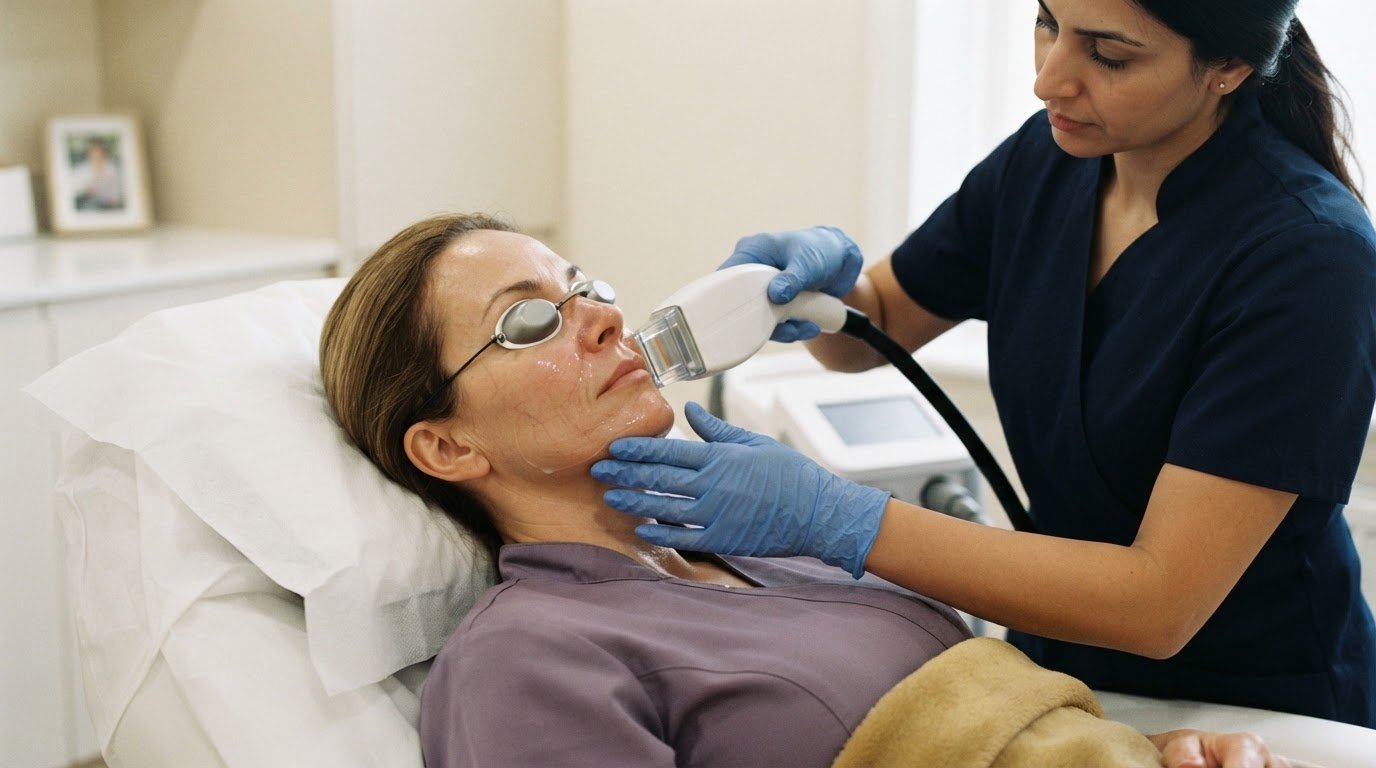
Nefretiti Laser Clinic & Aesthetics offers Laser Tattoo Removal, alongside Laser Hair Removal and Carbon Laser Facial treatments. If you’re considering tattoo removal, a conversation can help you discuss your priorities and questions before deciding whether to proceed.
Take the time you need to choose a next step that feels right for you.
Frequently Asked Questions
What is tattoo removal?
Tattoo removal means reducing or clearing unwanted tattoo pigment, although the aim doesn’t always need to be complete clearance. Someone planning a cover-up may only want the existing design lightened. Removal also can’t restore linework or shading that treatment has cleared. Decide whether you want fading or a clearer area before agreeing on a treatment goal, as these aims can shape the plan.
How often do these reactions happen?
There isn’t a fixed pattern that applies to everyone, and one person’s response can’t predict another’s. If you’re tracking changes, note when they appear and whether they settle or worsen. Photos taken in similar lighting can help you describe progress at a follow-up, but they don’t replace an assessment. Contact a healthcare professional if symptoms are severe or you’re concerned about a change.
How does the session actually work?
The practitioner treats the agreed tattoo area with laser pulses. Before starting, make sure you understand which parts of a multi-coloured design are being addressed and what the appointment aims to achieve. If you need a pause, tell the practitioner during treatment. This discussion can help you feel more in control, particularly if you’re nervous about the sensation or have a larger design.
What happens in the first week?
The treated area can still look noticeable during the first week, so consider this when planning an event or choosing clothing. If the design sits beneath a sleeve, for example, loose fabric can reduce rubbing. Avoid judging the final appearance from an early view: changes to the tattoo continue after the appointment. If the skin’s appearance worries you, describe the change to a healthcare professional.
What should you do to avoid adverse reactions?
No preparation can remove every risk, but clear communication helps prevent avoidable problems. Before treatment, tell the practitioner about relevant health changes, allergies and medicines, including anything started since your previous appointment. Don’t stop prescribed medicine on your own. Afterwards, follow the instructions for your treated area rather than adding a product or remedy based on advice intended for someone else.
What would make healing take longer?
Recovery differs between people, so how one tattoo healed may not predict how another area will settle. A larger treated area involves more skin, and irritation from rubbing or picking may complicate recovery. If healing seems slower than expected, avoid comparing it with someone else’s timeline. Share your concerns and any changes with a healthcare professional rather than trying to remove scabs yourself.
What are the risks or complications of this procedure?
Possible complications include changes in skin pigment, scarring and incomplete removal. Before deciding, consider how you’d feel if the tattoo faded unevenly or remained partly visible. This matters especially if you want a cover-up, because cleared linework and shading can’t be brought back. Discuss your preferred outcome and concerns about visible skin changes during the assessment, before treatment begins.
What does tattoo removal feel like, and how painful is it?
The sensation varies between people, so it’s difficult to predict your personal level of discomfort. If pain is a concern, raise it before the appointment and discuss whether numbing is suitable for you. Agree how to communicate if you need a pause. This lets the practitioner respond to your experience during treatment, rather than relying on someone else’s description of how it felt.
Comments