


What Are Polynucleotides? The Ultimate Guide to Regenerative Aesthetics in 2026
What if the secret to a youthful glow wasn't about adding volume, but about teaching your skin to heal from within? Many of our clients in Hornchurch and Romford tell us they fear the "over-filled" look, yet they struggle with persistent dark circles or crepey skin that traditional treatments just don't reach. You might be asking yourself, what are polynucleotides, and why is everyone in the aesthetics world talking about them for 2026? These biological building blocks represent a shift from masking ageing to true cellular repair.
At Nefretiti Laser Clinic & Aesthetics, we believe that "pleasure in the job puts perfection in the work," a philosophy that guides our approach to regenerative skin health. In this guide, you'll discover how these injectable treatments restore elasticity and thickness for a result that looks entirely natural and lasts. We will explore the science behind cellular regeneration, compare them to popular boosters like Profhilo, and explain why residents across Upminster and Gidea Park are choosing this sophisticated path to renewed confidence. From treating delicate eye areas to improving overall skin texture, we'll cover everything you need to know about this transformative technology.
Table of Contents
What are Polynucleotides and Why are They Trending in 2026?
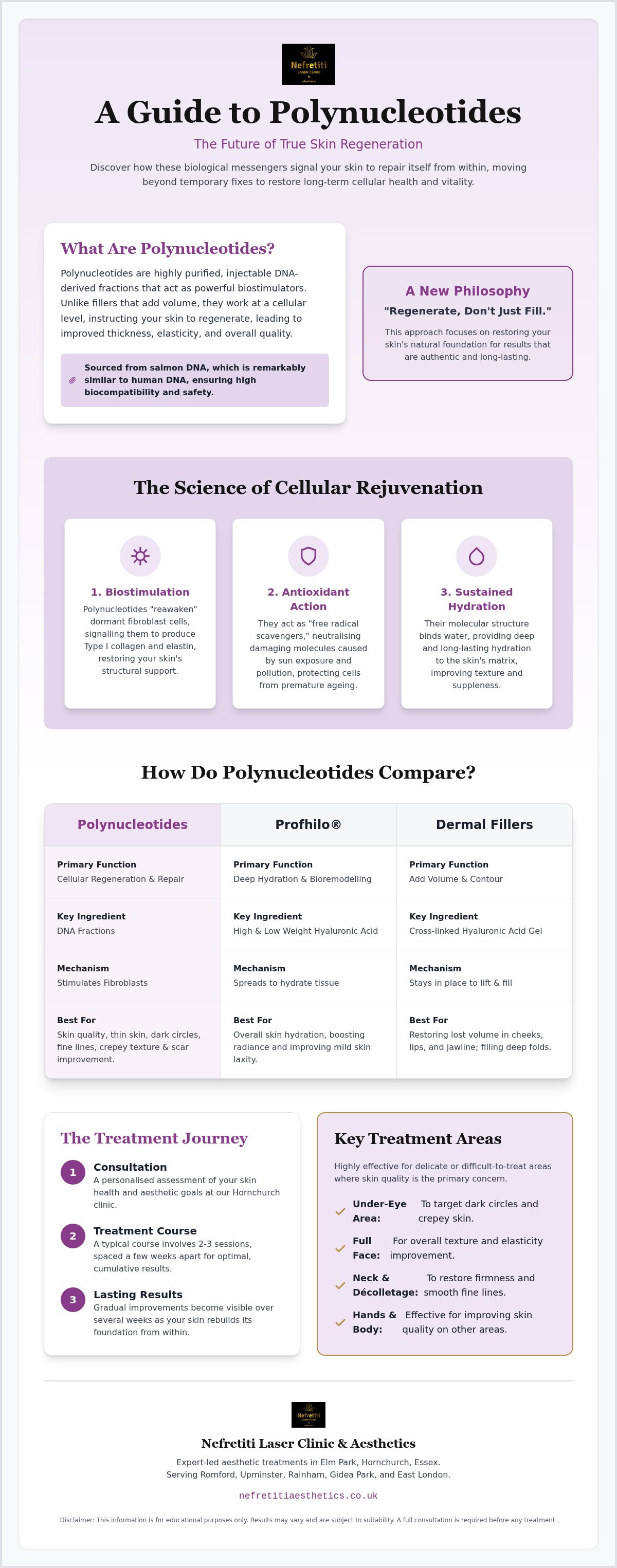
The way we approach ageing has fundamentally changed. We've moved away from the heavy, artificial look of the past and entered an era where skin health and cellular integrity are the primary goals. For many residents in Hornchurch and Romford, the question isn't just about how to look younger, but how to make skin behave younger. You might have heard the term mentioned in clinical circles and wondered: what are polynucleotides? These highly purified DNA fractions represent the next generation of regenerative medicine, offering a way to repair skin at a foundational level rather than simply masking the signs of time.
This shift from 'filling' to 'regenerating' is why this treatment has become the biological gold standard in 2026. Polynucleotides are typically derived from salmon DNA, which bears a remarkable similarity to human DNA. This high level of biocompatibility means the body recognises the molecules and uses them to kickstart its own repair mechanisms. At Nefretiti Laser Clinic & Aesthetics, we've seen a surge in interest from patients in Upminster and Elm Park who want subtle, natural-looking results that are backed by science and clinical evidence.
The Biological Building Blocks: DNA and RNA Explained
Nucleotides are the essential subunits of DNA that provide the genetic instructions required for every cellular process in your body. When these molecules are introduced into the skin, they act as messengers to tired or damaged cells, signalling them to restart their natural repair and replication cycles. It's important to understand that the DNA used in our clinic is ultra-purified through a rigorous filtration process. This ensures the final product contains no genetic material from the source, making it a pure, safe biostimulator that focuses entirely on improving skin resilience. This level of purity is a key reason why these treatments are increasingly discussed in peer-reviewed research regarding advanced tissue engineering.
Regenerative Medicine vs Traditional Beauty Treatments
There is a distinct difference between a temporary surface glow and long-term structural tissue repair. Polynucleotides are classified as biostimulators, meaning they encourage the body to rebuild its own foundation of collagen and elastin. This technology has a deep clinical heritage in medical fields such as orthopaedics and chronic wound healing. In the UK, the safety and efficacy of such regenerative techniques are often highlighted in medical journals that inform NHS protocols for complex tissue recovery. By bringing this medical-grade science into our aesthetic rooms in Essex, we can offer results that are truly restorative. Whilst GOV.UK and other regulatory bodies continue to oversee the safety of the aesthetics industry, polynucleotides stand out as a trusted, evidence-based option for those seeking to invest in the long-term health and thickness of their skin.
How Polynucleotides Work: The Science of Cellular Rejuvenation
Gaining a deeper understanding of what are polynucleotides involves looking at their three-pronged approach to skin health: biostimulation, antioxidant protection, and deep hydration. Whilst traditional treatments often focus on a single symptom, these DNA-derived molecules address the root causes of skin ageing. When introduced into the dermis, they stay in the tissue longer than simple hyaluronic acid boosters, providing a sustained signal for repair that continues to work weeks after your visit to our Hornchurch clinic.
Fibroblast Activation: Turning on Your Collagen Factory
Fibroblasts are the essential cells responsible for maintaining skin structure and youthfulness. As we age, these cells often become dormant, leading to a loss of elasticity and the formation of fine lines. Polynucleotides essentially 'reawaken' these dormant cells, encouraging them to behave like younger versions of themselves. By stimulating the production of Type I collagen and elastin, the treatment delivers gradual, natural-looking results that evolve over several weeks. It isn't an artificial change; it's a structural restoration of your skin's own foundation.
Beyond collagen production, these molecules offer a powerful 'scavenging' effect. They neutralise free radicals, which are unstable molecules that damage skin cells and accelerate the visible signs of ageing. By acting as a biological shield, polynucleotides protect the skin from environmental stressors whilst simultaneously improving microcirculation. Enhanced blood flow increases tissue oxygenation, giving the skin a healthy, vibrant quality that topical creams simply cannot achieve. This results in a visible improvement in skin thickness and long-term hydration levels.
Anti-Inflammatory Properties and Wound Healing
One of the most remarkable features of this treatment is its ability to soothe chronic skin inflammation. Polynucleotides possess potent anti-inflammatory properties that help reduce redness and calm reactive skin. This makes them an excellent choice for clients dealing with acne scarring, rosacea-prone skin, or slow-healing tissue. At Nefretiti Laser Clinic & Aesthetics, we frequently utilise these properties to help our Essex clients achieve a more even, resilient complexion. Whether you're visiting us from Upminster or Romford, addressing underlying inflammation is key to achieving a truly healthy glow.
If you're curious about how this science applies to your specific skin concerns, you might consider booking a consultation at our Elm Park clinic to discuss a tailored treatment plan.
Polynucleotides vs Profhilo vs Dermal Fillers: Which is Best?
Choosing between the latest injectable treatments can feel overwhelming. Whilst dermal fillers and skin boosters like Profhilo have been the gold standard for years, polynucleotides offer a fundamentally different approach to rejuvenation. When patients ask us, what are polynucleotides, they are often looking for a solution that avoids the risks of migration or the heavy, over-filled appearance. Fillers provide instant volume by physically occupying space, and Profhilo acts like an internal moisturiser. In contrast, polynucleotides focus on biological repair. They don't just sit in the tissue; they are absorbed as they signal your cells to regenerate, leaving behind healthier, thicker skin rebuilt from within.
The longevity of results also varies between these options. Dermal fillers can last 6 to 18 months, whilst Profhilo typically requires maintenance every 6 months. Polynucleotides generally involve an initial course of three sessions, with the regenerative effects lasting between 6 to 12 months. Because they don't attract water in the same way as hyaluronic acid, they are far less likely to cause the puffiness that some clients in Romford or Upminster worry about. This makes them a sophisticated choice for those seeking subtle, long-term improvements in skin quality.
Biostimulation vs Volumisation: The Key Differences
The primary distinction lies in how the treatment interacts with your anatomy. Traditional fillers use a gel-like substance to lift and contour, which is excellent for replacing lost bone or fat volume. However, polynucleotides are biostimulators. They don't fill a line; they encourage the skin to smooth itself by producing new collagen. This makes them significantly safer for the delicate under-eye area, where traditional fillers often lead to swelling or blue-tinted discolouration. For a deeper look at how we tailor these options, explore our Advanced Skin Treatments Hornchurch guide.
Why Choose Polynucleotides Over Traditional Skin Boosters?
Profhilo is a fantastic treatment for overall radiance and hydration, but it has limitations. It works best on the mid and lower face and cannot be used too close to the eyes. Polynucleotides, however, are highly versatile. They are specifically effective at treating crepey skin and deep-seated tissue damage that simple hydration cannot fix. If your goal is to repair the tired look around the eyelids or improve skin thickness in the neck and hands, polynucleotides are often the superior choice. You can compare these options and their investment levels in our Profhilo cost Hornchurch summary to see which fits your 2026 skin goals best.
Treatment Areas and What to Expect During Your Visit
Polynucleotides are remarkably versatile, making them suitable for almost any area where skin quality has diminished. Whilst the face remains a primary focus, we also successfully treat the neck, décolletage, and hands for clients across Romford and Upminster. These areas often show signs of ageing first, yet they are frequently overlooked in standard skincare routines. Understanding what are polynucleotides helps patients realise that this isn't just about surface-level hydration; it's about structural repair in areas where skin is naturally thinner and more prone to crepiness. By improving the actual architecture of the dermis, we can restore a firmer, more resilient texture to these visible zones.
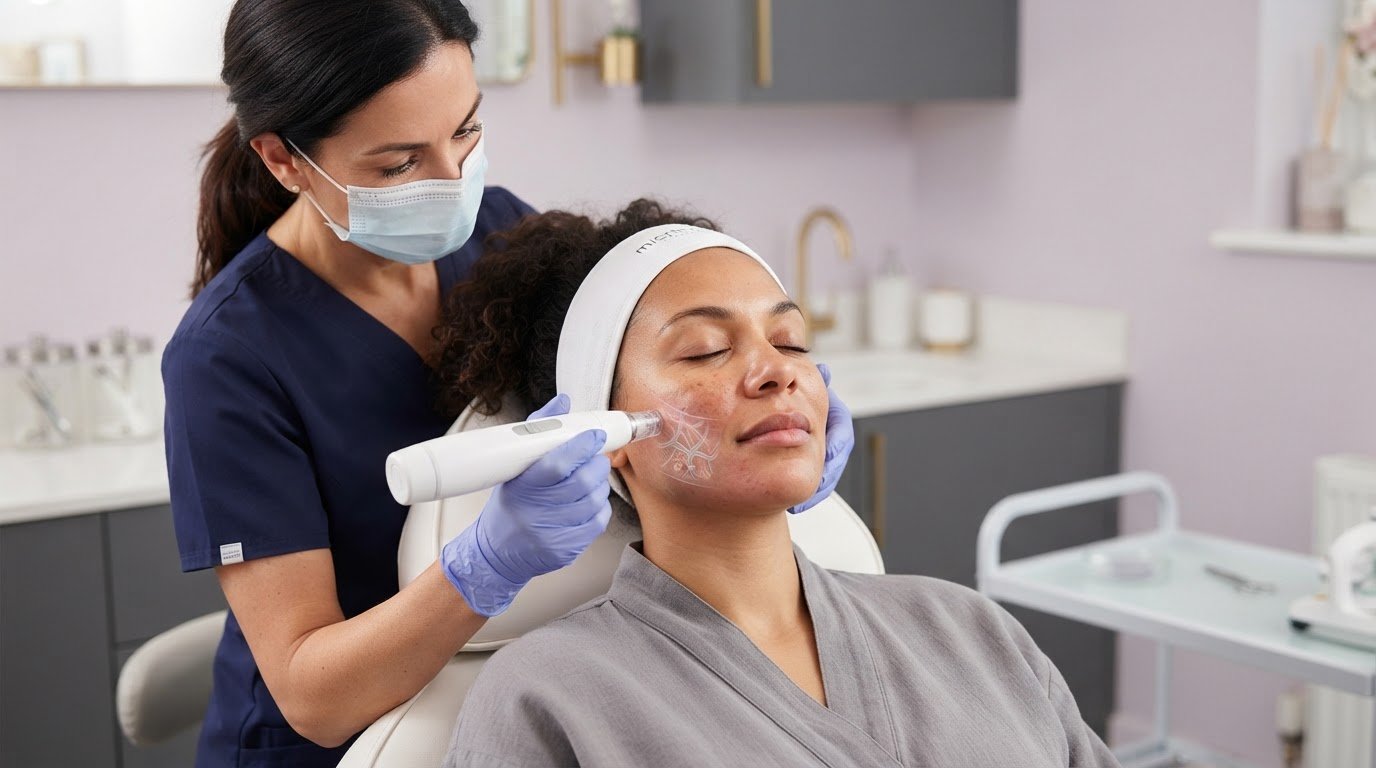
The typical treatment course consists of three sessions, usually spaced 2 to 4 weeks apart. This specific interval allows the biostimulation process to take hold before the next "instruction" is delivered to the cells. Most people are ideal candidates for this regenerative therapy, particularly those noticing a loss of elasticity or persistent dullness. Downtime is minimal, though you may experience small, temporary bumps at the injection sites for 24 to 48 hours as the product integrates into the tissue. This is a normal part of the process and quickly subsides, leaving no long-term marks.
Focus on the Eyes: Rejuvenating Tired Peepers with Lumi Eyes
The delicate skin around the eyes is often the first place to show fatigue and environmental damage. This is why eye rejuvenation is our most requested polynucleotide treatment in Hornchurch. Using specialised products like Lumi Eyes, we can target dark circles, hollows, and fine crow's feet with high precision. Because these DNA fractions don't attract excessive water, they avoid the "puffy eye" risk associated with traditional hyaluronic acid fillers. Results appear gradually as your body builds new tissue, usually reaching their peak a few weeks after your final session.
Your Journey at Nefretiti Laser Clinic & Aesthetics
Every transformation begins with a thorough consultation at our Elm Park clinic. We believe that "pleasure in the job puts perfection in the work," so we take the time to assess your skin health and medical history in detail. Every treatment is strictly subject to suitability. We prioritise your safety and peace of mind above all else. During the procedure, we use very fine needles, and a topical numbing cream is available to ensure your experience is as comfortable as possible. This meticulous, personalised approach is why residents from Rainham to Brentwood trust us with their skin health.
Expert Polynucleotide Treatments in Hornchurch and Essex
Nefretiti Laser Clinic & Aesthetics is a premier laser clinic Hornchurch residents rely on for advanced regenerative medicine. When investigating what are polynucleotides, many of our clients are looking for a trusted local expert who understands the intersection of clinical science and aesthetic artistry. From our base in Elm Park, we extend our expert services to the wider community, welcoming clients from Romford, Upminster, and across East London. We understand that choosing an aesthetic practitioner is a decision based on trust. As a fully licensed and insured clinic, we provide a calm, private space where your skin health is our absolute priority. Our clinical procedures and safety protocols are informed by the high standards set by UK health authorities, including the NHS and GOV.UK, ensuring that every treatment is delivered with meticulous care.
Personalised Skin Care Plans for Natural-Looking Results
Every face tells a unique story, which is why we never apply a generic approach to skin rejuvenation. Whether you are visiting us from Dagenham or Brentwood, your journey begins with a professional assessment to determine suitability. We specialise in creating bespoke plans that focus on achieving natural-looking results that enhance your features without artificial transformation. We believe that "pleasure in the job puts perfection in the work," a philosophy that ensures every personalised treatment plan is executed with precision. Our practitioners are experts in tissue health, ensuring that your regenerative therapy is tailored specifically to your skin's thickness and current condition.
Combining Polynucleotides with Advanced Laser Therapy
One of the key strengths of our practice is the ability to integrate polynucleotides with our core clinical services to amplify your results. For those seeking laser hair removal Romford or surrounding areas like Rainham and Gidea Park, polynucleotides can play a vital role in supporting the skin's recovery process by providing the necessary building blocks for tissue repair. Similarly, we often recommend these DNA-derived molecules to enhance the skin quality following Laser Tattoo Removal, helping the area remain resilient and healthy throughout the process.
The synergy between different technologies often yields the most impressive outcomes for our patients. We frequently combine polynucleotide injections with a Carbon Laser Facial to deeply cleanse and exfoliate whilst simultaneously signalling cellular repair. For clients interested in IPL skin treatments Essex, adding polynucleotides can help address underlying tissue resilience whilst the laser targets surface pigmentation and redness. This holistic approach, which is always subject to suitability, ensures that residents of Harold Wood and the surrounding boroughs receive expert, personalised services right on their doorstep.
Embrace a Future of Natural Skin Regeneration
Regenerative aesthetics represents a significant shift in how we approach ageing. By choosing treatments that signal your body to repair itself, you can achieve a glowing, youthful complexion that remains entirely your own. We've discussed what are polynucleotides and their unique ability to reduce dark circles and fine lines naturally by strengthening the skin's foundation. At Nefretiti Laser Clinic & Aesthetics, our expert practitioners provide these personalised services within a fully licensed and insured clinical environment in Elm Park, Hornchurch.
Whether you're visiting from Romford, Upminster, or anywhere across Essex, our commitment to safety ensures you feel supported at every step. We believe that pleasure in the job puts perfection in the work, a philosophy that guarantees a meticulous approach to your skin health. It's time to move beyond temporary fixes and invest in long-term resilience. We look forward to helping you achieve a renewed sense of confidence through subtle, expert enhancements that prioritise your peace of mind and natural beauty.
Frequently Asked Questions
Are polynucleotides safe and are there any side effects?
Polynucleotides are considered very safe because they consist of highly purified DNA fractions that are biocompatible with human tissue. Side effects are typically mild and temporary, such as slight swelling, redness, or small bumps at the injection site. These usually resolve within 24 to 48 hours. At Nefretiti Laser Clinic & Aesthetics, we prioritise your safety by conducting a thorough assessment to ensure the treatment is entirely right for your skin.
How long do the results of a polynucleotide treatment last?
Results typically last between 6 to 12 months following a full course of treatment. Because polynucleotides work by repairing the skin at a cellular level, the structural improvements are long lasting but not permanent. We often recommend a maintenance session every 6 to 9 months to sustain your natural looking glow. The exact longevity varies depending on individual lifestyle factors and the specific skin condition being treated during your visit.
Can I have polynucleotides if I have a fish allergy?
No, you should avoid this specific treatment if you have a known allergy to fish or trout. Since the DNA fractions are derived from salmon or trout, there is a potential risk of an allergic reaction. During your consultation in Elm Park, we will review your medical history in detail. If you aren't suitable for this procedure, we can suggest alternative regenerative treatments like microneedling or HydraFacials to achieve your goals.
How many sessions of polynucleotides will I need for best results?
Most clients require a initial course of three sessions to achieve the best outcome. We usually space these appointments 2 to 4 weeks apart to allow the biostimulation process to work effectively. By the third session, the skin's architecture is significantly improved. Some more mature skin types or those with deep scarring may benefit from a fourth session, which we will discuss during your personalised assessment in our Hornchurch clinic.
Is there any downtime after polynucleotide injections?
Downtime is minimal, but you should expect small, temporary bumps at the injection sites for about 24 to 48 hours. You might also experience slight bruising or redness, which is common with any injectable treatment. Most of our Essex patients return to their normal activities immediately. We simply advise avoiding heavy exercise, saunas, or direct sun exposure for the first 24 hours following your procedure to ensure the best recovery.
Can polynucleotides be combined with anti-wrinkle injections?
Yes, combining these treatments is an excellent way to achieve comprehensive rejuvenation. Whilst anti-wrinkle injections relax the muscles to smooth surface lines, polynucleotides improve the actual quality and thickness of the skin tissue. This dual approach addresses both the muscle movement and the underlying skin health. We can tailor a combined plan during your visit to ensure natural looking results that address all your concerns in one cohesive strategy.
How soon will I see results after my treatment in Hornchurch?
You may notice an initial improvement in hydration quickly, but the true regenerative results appear gradually over several weeks. It takes time for your cells to produce new collagen and elastin. Most patients see a significant difference in skin texture and thickness about 3 to 4 weeks after their second session. The full effect of the treatment course typically peaks around 3 months after your final session at our clinic.
What is the difference between polynucleotides and Lumi Eyes?
Understanding what are polynucleotides helps clarify this, as Lumi Eyes is simply a specific brand of polynucleotide treatment formulated specifically for the eye area. Lumi Eyes has a lower viscosity, which makes it ideal for the delicate skin under the eyes without causing puffiness. Other polynucleotide products are used for thicker skin on the face or neck. Both options provide the same cellular repair benefits but are tailored to different treatment zones.


Comments