


Charcoal Facial Benefits for Blackheads and What Masks Can Do
Updated: 2 days ago
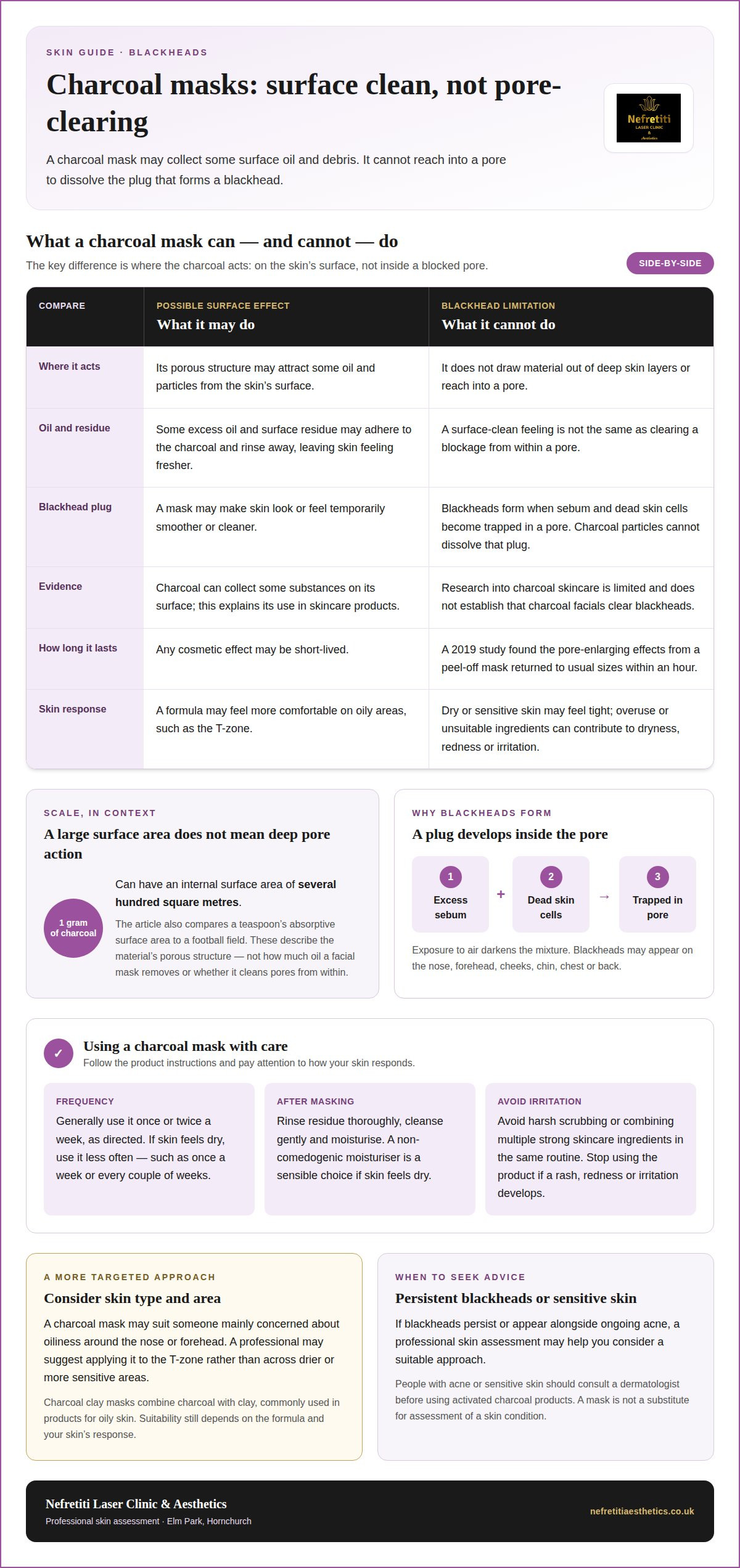
A charcoal mask can leave skin feeling cleaner without clearing a blackhead from inside a pore. The charcoal facial benefits for blackheads are limited: activated charcoal may attract excess oil and surface debris, but its particles can’t enter pores or dissolve the material that forms a blackhead. Any smoother-looking effect may be temporary.
It’s understandable to hope a mask will unclog pores, especially when blackheads persist. This article explains what activated charcoal is, what a mask may and may not do, and which irritation risks to consider. It also looks at why blackheads form and when a professional skin assessment may help you choose a suitable approach.
Table of Contents
What’s activated charcoal?
Activated charcoal is a processed form of carbon, often made from bamboo, coconut or wood. Its porous structure helps explain its use in skincare to attract some oil and debris from the skin’s surface.
Activated charcoal’s adsorbing properties
Adsorption means particles collect on a material’s surface rather than being absorbed into its inner structure. Activated charcoal’s many pores provide surfaces where certain substances can become trapped. One gram can have an internal surface area of several hundred square metres. This helps explain its use in masks, but doesn’t mean it draws material from deep skin layers.
The distinction matters if you’re considering a mask for blackheads. Excess oil and surface residue may adhere to charcoal and rinse away, leaving skin feeling fresher. However, this surface action isn’t the same as removing a blockage from a pore. Dead skin and oil can form a plug inside the pore, beyond the reach of charcoal particles on the skin.
A teaspoon of activated charcoal has an absorptive surface area equivalent to a football field. That comparison describes the material’s porous structure, not how much oil a facial mask will remove. A mask’s effect depends on its formulation and contact with the skin. This isn’t proof that charcoal cleans pores from within.
How activated charcoal works on skin
Activated charcoal is made by heating carbon-rich materials, such as coconut or wood, and processing them into powder. The material is heated twice during production, creating micropores that increase its surface area. In a skincare mask, those pores may attract some excess oil and surface particles. This may leave the skin feeling cleaner, but it doesn’t establish that the product treats blackheads.
On the face, charcoal’s expected action is local and superficial. For example, a mask applied to an oily area may collect some residue before being rinsed away. It doesn’t work like an ingredient that dissolves material inside a blocked pore. Skin type matters too: a formula that feels comfortable on oily skin may leave dry or sensitive skin feeling tight.
Activated charcoal can trap substances on its surface, but claims about absorbing bacteria or toxins shouldn’t be confused with proven skincare outcomes. A face mask isn’t a substitute for treatment of a skin condition. The charcoal facial benefits for blackheads are best understood as a possible surface-cleansing effect, not pore unclogging. A balanced skincare routine should reflect your skin type and how it responds to each product.
Do Charcoal Face Masks Work and Are They Safe?
Evidence for charcoal masks treating blackheads is limited, and claimed benefits largely rest on anecdotal reports. Any cosmetic effect can fade within hours; a 2019 study found pore-enlarging effects from a peel-off mask returned to usual sizes within an hour.
Use a charcoal mask according to its instructions, generally once or twice a week, and moisturise afterwards. Persistent blackheads alongside acne or sensitive skin warrant professional advice. People with acne or sensitive skin should consult a dermatologist before using activated charcoal products.
Charcoal products and deep cleansing
Charcoal cleansers, masks and soaps are skincare products intended to collect surface oil and impurities during cleansing. They can help remove sweat, SPF and daily grime, but “deep cleansing” doesn’t mean clearing a blocked pore from within.
A professional facial may use charcoal products as part of skin cleansing, with the product and approach tailored to skin type and ingredients. After treatment, gentle cleansing and moisturising can support skin comfort. A non-comedogenic moisturiser is a sensible choice after removing a mask, particularly if your skin feels dry.
Evidence for blackhead results
Research into charcoal skincare benefits is limited, and evidence doesn’t establish that charcoal facials clear blackheads. A temporarily clean or smoother appearance isn’t proof that a pore has been unclogged.
Visible cosmetic effects can fade within hours, so a mask shouldn’t be treated as a lasting blackhead solution. Follow the product instructions and don’t use it more often than once or twice a week. If sensitive skin feels dry after masking, use it less often, such as once a week or every couple of weeks.
After a professional charcoal facial, keep the rest of your routine gentle. Avoid combining the treatment with harsh scrubbing or multiple strong skincare ingredients in the same routine, as this can increase irritation. Rinse mask residue thoroughly, then apply moisturiser. Stop using the product if redness, rash or irritation develops.
Charcoal products don’t replace professional assessment when blackheads persist or appear with ongoing acne. A dermatologist can assess acne and advise on suitable care, especially for sensitive skin. If a mask causes irritation, pause its use instead of applying more product to the affected area.
For a professional skin assessment and guidance on whether a charcoal facial suits your skin, you can book a treatment consultation.
Charcoal masks and blackheads
Blackheads form when excess sebum mixes with dead skin cells and becomes trapped in a pore. Exposure to air darkens the mixture, creating the familiar appearance. Blackheads can occur on the nose, forehead, cheeks, chin, chest and back, so consider the affected area when deciding whether to use a mask.
A charcoal face mask may suit someone whose main concern is oiliness around the nose or forehead. A professional may suggest applying it only to this T-zone, rather than across the whole face, to limit exposure on drier or more sensitive areas. This targeted approach can make a skincare routine more considerate of combination skin.
Charcoal clay masks combine charcoal with clay, which is commonly used in products for oily skin. If your skin feels dry after masking, use the product once a week or every couple of weeks instead. Follow the instructions and pay attention to your skin’s response.
Targeting the T-zone can be useful when your cheeks feel comfortable but your nose becomes shiny. For example, applying a mask to the nose and forehead avoids treating areas that don’t appear oily. This doesn’t make the mask a blackhead-removal method; it simply focuses the product where oiliness is most noticeable.
Blackheads may also appear across the chin or cheeks, so the T-zone isn’t the only possible area of concern. Don’t apply a mask to red, inflamed or broken skin. Already irritated skin needs a gentler approach, and adding a clay product may increase dryness or sensitivity.
Frequency matters. Using a charcoal mask more often than the product directs can leave skin dry, red or sensitive. If your skin feels tight afterwards, reduce how often you apply the mask and follow with moisturiser. Rinse it off thoroughly rather than leaving it on longer in the hope of a clearer result.
Peel-off face masks can pull at the skin during removal, so a rinse-off clay mask may be a gentler option if you’re concerned about sensitivity. Avoid masking active blemishes or damaged skin. If blackheads persist alongside acne, or your skin becomes sore and inflamed, professional assessment can help distinguish routine congestion from a problem needing further care.
Think of charcoal masks as an optional part of skincare, not a guaranteed route to clearer pores. Focused application, a suitable product and sensible frequency can limit unnecessary exposure, while persistent blackheads may need a different approach.
Potential irritation and other risks
Yes. Charcoal masks can cause dryness, redness and sensitivity, especially with overuse or on sensitive skin. Avoid applying them to active breakouts or broken skin, and stop if a rash or irritation appears.
Dryness and irritation risks
Dryness and irritation are possible reactions to charcoal masks, particularly when the product is used too often or doesn’t suit your skin. For example, combination skin may feel tight on the cheeks after a mask is spread across the whole face. Sensitive skin can also react to other ingredients in the formula, not just charcoal.
Some charcoal masks, especially peel-off types, may cause excessive peeling, infection, scarring or chemical burns. These are potential risks, not expected results, but they matter when choosing a product. Claims about what charcoal masks can trap should be treated cautiously, and they should not be relied on to prevent breakouts.
Avoiding dryness, irritation and breakouts
To reduce irritation, review the full ingredients list for substances that have caused a reaction before. If you’re trying a product for the first time, test a small amount on the inside of your elbow, then check for itching or redness within a few hours. Keep it off active blemishes, broken areas and already inflamed skin.
Use the mask in moderation and follow its instructions. If dryness develops, use it less often or stop altogether. After removing a mask, wash gently and apply a soothing, non-comedogenic moisturiser. A harsh scrub or another strong product straight afterwards may add to discomfort.
Skin response depends on the formula and your skin type. For instance, a mask used on an oily forehead may feel comfortable, while the same product irritates dry cheeks. Applying it only to the oily T-zone can limit contact with areas that don’t need it. If you have combination skin, avoid coating your whole face if that causes irritation.
Don’t use a charcoal mask on damaged skin while it heals. If redness, itching or a rash appears after use, rinse the product off and stop using it. Persistent irritation, worsening breakouts or signs of infection need professional assessment, not another mask. People with acne or sensitive skin should seek dermatological advice before trying activated charcoal products.
Take particular care with peel-off products because removal can pull at the skin. If a mask causes discomfort, don’t continue peeling or reapply it to the same area. A gentle cleanser and moisturiser can support the skin afterwards. Leaving inflamed or broken areas untreated can help avoid further irritation.
Whether charcoal can unclog pores or remove blackheads
A charcoal mask may help cleanse the skin’s surface, but it may not clear congestion within a pore. Charcoal particles cannot enter pores or dissolve keratin, the material that helps form the blockage. A mask can collect some surface residue, but that cleansing effect is different from clearing congestion within a pore.
This distinction matters if blackheads keep appearing on your nose or chin despite regular cleansing. Your skin can feel cleaner after a mask while the pore remains blocked. The dark mark isn’t dirt sitting on top of the skin, so washing harder or using a peel-off charcoal mask won’t reliably remove its cause.
For oily skin, a charcoal mask may temporarily reduce surface oil, making the complexion appear fresher. That visible change shouldn’t be mistaken for blackhead extraction or lasting pore clearance. If the same bumps remain after rinsing, the mask hasn’t dissolved their plugs. Repeated applications can also irritate skin without addressing the underlying congestion.
Alpha hydroxy acids, beta hydroxy acids, retinol and benzoyl peroxide are ingredients found in some skincare products, but this article does not recommend using them to treat blackheads. Advice about a 2% salicylic acid cleanser, or expecting changes in oiliness and congestion in roughly two weeks and skin texture in four to six weeks, should not be taken as treatment guidance.
These timeframes describe gradual skin changes, not instant removal after one wash. For example, someone using salicylic acid may first notice less oil, then a change in texture later. Product strength and frequency affect tolerance. Combining several active ingredients at once can increase irritation, so a simple routine is easier to assess.
A dermatologist can assess persistent blackheads, particularly when they occur alongside painful acne, inflammation or scarring. An assessment can help distinguish ordinary pore congestion from acne that needs more targeted care. Avoid squeezing or scraping blackheads, as pressure can inflame the surrounding skin and leave marks.
The practical takeaway is clear: charcoal supports surface cleansing, not pore unclogging. For example, a charcoal mask can be an occasional cleansing step, while persistent congestion calls for an approach that addresses the plug itself. A dermatologist can advise on suitable options when blackheads continue or your skin becomes sore.
Nefretiti Laser Clinic & Aesthetics: Charcoal facial
Nefretiti Laser Clinic & Aesthetics offers a charcoal facial for people seeking professional skin cleansing. It may be considered for surface oil and residue, but it shouldn’t be expected to unclog pores or remove blackheads from within. A consultation helps establish whether the treatment suits your skin and concerns, particularly if you have sensitivity, active irritation or persistent acne.
Based in Elm Park, Hornchurch, the clinic welcomes clients looking for a considered approach to skin treatments. If blackheads continue to concern you, discuss your goals and current skincare routine before deciding on treatment. This helps set realistic expectations and supports a choice suited to your complexion.
Contact Nefretiti Laser Clinic & Aesthetics to discuss a charcoal facial.
Choose a skin plan that fits your goals
Your next step is to decide what you want to change in your skincare routine. If your priority is a fresher-feeling complexion, consider whether a facial fits that aim. If persistent congestion is your main concern, focus the discussion on that pattern and any sensitivity or breakouts you experience.
Understanding the charcoal facial benefits for blackheads also means setting a clear treatment goal. Bring your current routine and concerns into the conversation, so the approach can be considered in context rather than as a standalone fix. A calm, informed decision is a better foundation for skin care than adding treatments without a clear reason.
Take your time, discuss what matters to you, and choose your next step with confidence.
Frequently Asked Questions
What are blackheads, and is charcoal good for skin?
Blackheads are open comedones, formed when a pore becomes blocked with oil and dead skin cells and the surface darkens. Charcoal can be included in skincare for its surface-cleansing properties, but it isn’t suitable for every complexion. For example, dry or sensitive skin may feel tight after using a charcoal product. Check the full formula, since other ingredients can also affect how your skin responds.
What are the benefits of a charcoal face mask?
A charcoal face mask may lift some surface oil and residue, leaving skin feeling cleaner after rinsing. This may appeal if your forehead or nose tends to look shiny. The effect is cosmetic, not a reliable treatment for persistent blackheads or acne. Choose a product that suits your skin type, follow its instructions and stop using it if discomfort or a rash appears.
Charcoal vs salicylic acid: what is the difference?
Salicylic acid may help loosen the material contributing to blackheads. Charcoal mainly collects surface residue and oil; it doesn’t do the same job. For example, a charcoal cleanser may leave skin feeling fresh, while a salicylic acid product acts more specifically on congestion. How either product affects your skin depends on its formulation and your individual skin.
Does using charcoal pose any risk?
Yes. A charcoal product can cause irritation, dryness or an allergic response, particularly if its other ingredients don’t suit you. Peel-off masks may also pull at delicate or already irritated skin. If you’re trying one for the first time, test a small amount on the inside of your elbow and look for itching or redness over a few hours. Avoid using it on broken or inflamed skin.
Does charcoal actually draw out toxins or unclog pores?
No. Claims that a charcoal mask draws out toxins or detoxifies the skin aren’t proof that it removes harmful substances from your body. A topical mask can collect some surface material, but it doesn’t reach inside pores to clear blackhead plugs. Activated charcoal taken by mouth is different from a face mask and should only be used internally under medical supervision.
So what does charcoal genuinely do?
In skincare, activated charcoal provides a porous surface that can hold some particles and oil from the skin’s surface. A cleanser or mask may therefore help remove residue during washing. This doesn’t establish that charcoal kills bacteria, treats acne or improves every complexion. If a product leaves your skin tight or uncomfortable, its cleansing effect may not suit your skin type.
What are its uses?
Activated charcoal is used in topical cosmetic products such as face masks, cleansers and soaps. Depending on their formulation, these products are intended to cleanse the skin or manage surface oil. They aren’t interchangeable: a cleanser is rinsed away, while a mask stays on for the time stated in its directions. Don’t use a facial product internally; oral activated charcoal has different uses and requires medical supervision.
Does a charcoal facial remove blackheads or reduce their appearance?
A charcoal facial shouldn’t be expected to remove blackheads from inside pores. Skin may look temporarily fresher after surface oil and residue are cleansed away, but that doesn’t mean the underlying plugs have cleared. For example, blackheads that remain visible after treatment may need a different skincare approach. Seek professional assessment if congestion persists alongside painful, inflamed acne or scarring.
Ready to book? See prices and book facials at our Elm Park, Hornchurch clinic – 2 minutes from Elm Park station.
Comments