


EMS Body Sculpting for Muscle and Fat Reduction in Essex
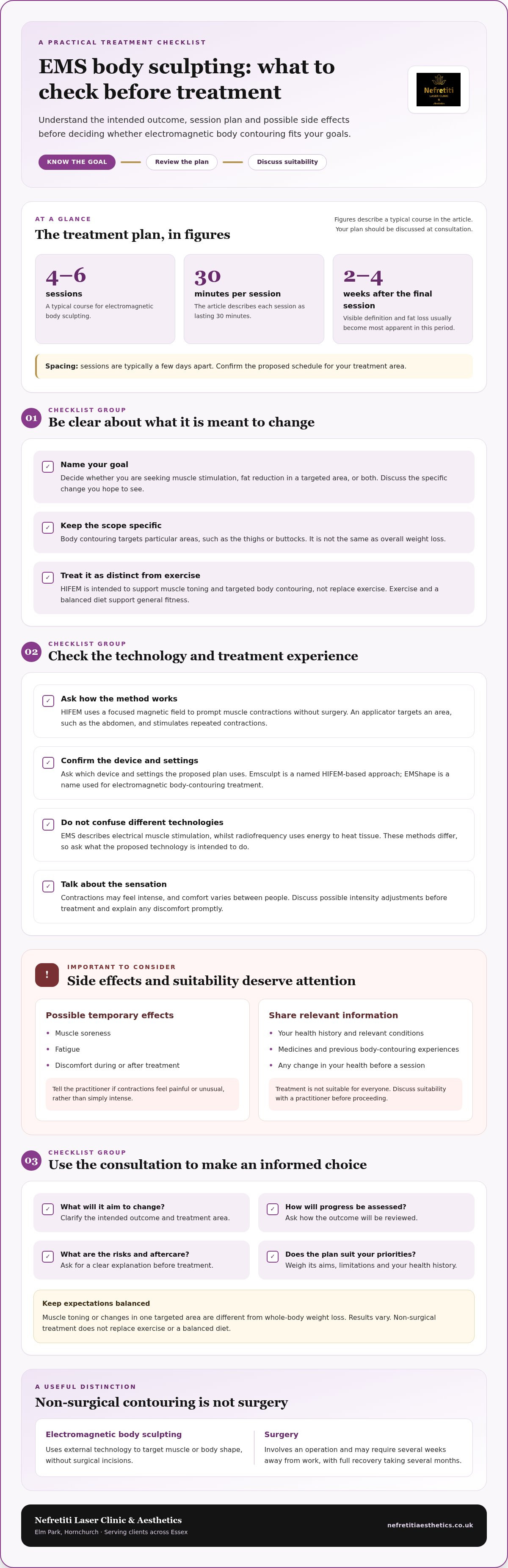
Side effects deserve as much attention as the sculpting effect. With EMS body sculpting, temporary muscle soreness, fatigue or discomfort may occur, and the treatment isn’t suitable for everyone. A typical course for a treatment in Essex designed to build muscle and burn fat involves four to six sessions, each lasting 30 minutes.
It’s understandable to want to know what muscle contractions feel like, how HIFEM technology is intended to target muscle and fat, and what to expect afterwards. This guide covers how the treatment works, who may be suitable and which side effects to consider, helping you make an informed decision after a professional consultation.
Table of Contents
Non-surgical body sculpting and fat reduction
Non-surgical body sculpting uses external technology rather than surgery to target muscle or body shape. If you are considering a treatment in Essex to build muscle and burn fat, compare its method, session plan and downtime with your goals.
Non-invasive electromagnetic sculpting
This approach uses electromagnetic energy to stimulate muscle tissue without surgical incisions. A typical course involves four to six 30-minute sessions, spaced a few days apart. Visible definition and fat loss usually become most apparent two to four weeks after the final session. People in Hornchurch, Romford and Upminster can ask about the treatment area, intensity and planned outcomes.
Emsculpt is a named HIFEM-based approach. EMS describes electrical muscle stimulation, while radiofrequency uses energy to heat tissue. These methods differ, so compare the technology and what it is intended to do.
Fat reduction and body contouring
Body contouring targets specific areas, such as the thighs or buttocks, rather than overall weight loss. Discuss whether your goal is muscle stimulation, fat reduction or both. Exercise and a balanced diet support general fitness; non-surgical treatments do not replace these habits. Surgery involves an operation and may require several weeks away from work, with full recovery taking several months.
To assess an Essex clinic, review practitioner training, experience and insurance. Ask for a clear explanation of the device, risks and aftercare. The aesthetic treatments available in Essex page offers local context when comparing options.
High-Intensity Focused Electromagnetic technology
HIFEM uses a focused magnetic field to stimulate muscle contractions without surgery. It is intended to support muscle toning and targeted body contouring, not to replace exercise.
Electromagnetic muscle stimulation
During electromagnetic muscle stimulation, an applicator targets an area such as the abdomen and prompts involuntary contractions. EMShape is a name used for electromagnetic body-contouring treatment; ask which device and settings the proposed plan uses. If you’re considering a treatment in Essex to build muscle and burn fat, set a clear goal at consultation, such as improving the appearance of abdominal definition.
Effectiveness depends on the outcome being assessed. Muscle toning and changes in a targeted area are different from whole-body weight loss. Discuss an Essex treatment intended to build muscle and burn fat in those specific terms, including what it aims to change and how progress will be assessed.
Electromagnetic muscle contractions
Magnetic stimulation prompts repeated contractions in the targeted muscle. The sensation may feel intense, so discuss comfort and possible intensity adjustments before treatment begins. Focusing on an area such as the abdomen helps clarify the intended body-contouring outcome.
No surgical incision means no wound from an operation, but the sensation during treatment and afterwards can differ between people. Discuss your health history, suitability and aftercare during consultation, and explain any discomfort promptly. Regular exercise remains a separate way to strengthen muscles and support general fitness. To discuss EMS body contouring, you can book a treatment consultation.
Nefretiti Laser Clinic & Aesthetics: Laser Hair removal
Nefretiti Aesthetics offers laser hair removal for people seeking a long-term reduction in unwanted hair, rather than muscle toning or fat reduction. These treatments address different goals: laser hair removal targets hair, while electromagnetic body sculpting focuses on muscle stimulation.
If unwanted hair is your concern, a consultation can help establish whether laser hair removal is suitable for the area and your skin and hair type. The clinic also offers laser tattoo removal, charcoal facials and IPL skin treatments for other aesthetic concerns.
For a calm, personalised discussion about treatment options, contact Nefretiti Laser Clinic & Aesthetics or visit nefretitiaesthetics.co.uk.
Choose a considered next step
If you’re considering a treatment in Essex to build muscle and burn fat, start by defining the change you hope to see and discussing whether the approach suits your goals and health history. A consultation gives you space to raise concerns, understand the treatment plan and make a considered choice.
Results vary, so keep expectations realistic and consider how treatment fits alongside your everyday wellbeing. There’s no need to rush your decision; feeling informed is an important part of moving forward with confidence.
A thoughtful conversation can help you decide what feels right for you.
Frequently Asked Questions
Are there any side effects?
Temporary muscle soreness, fatigue or discomfort may follow EMS body sculpting. Tell the practitioner if contractions feel painful or unusual, rather than simply intense. Note when symptoms begin and how they change, then share this information before another session. Seek medical advice if symptoms are severe or persist.
Who should discuss suitability before treatment?
Anyone considering treatment should have a consultation covering their health history and the area they want addressed. Mention relevant health conditions, medicines and previous experiences with body-contouring procedures. This gives the practitioner useful context to assess suitability and explain the treatment plan. Don’t leave out concerns simply because they seem unrelated to the treatment area.
What should I ask at a consultation?
Ask which technology will be used, what the treatment aims to change and how progress will be assessed. You can also discuss the sensations you may experience, possible side effects and aftercare. Clear answers help you understand the proposed approach and decide whether its aims match your priorities.
How can I prepare for an appointment?
Before your appointment, note your treatment goals, relevant health information, medicines and any questions you want answered. Follow the clinic’s appointment instructions, as preparation can depend on the treatment plan. If your health changes before a session, tell the practitioner before treatment starts.
What if the contractions feel uncomfortable?
Tell the practitioner promptly if the sensation becomes painful or concerning. Your discomfort should be addressed before treatment continues. Discuss how intensity can be managed and agree how you’ll communicate during the session. This helps the practitioner respond to your experience rather than assume what feels comfortable.
How should I judge whether the treatment suits my goals?
Write down the change you’re hoping for and the area you want to focus on, then compare these with the treatment’s stated aims. Ask how the practitioner will review progress and what would be a realistic outcome for you. This keeps your decision grounded in your priorities, not generalised promises.


Comments