


How to Improve Skin Texture on Your Face: A Practical Guide
Poreless skin isn’t the goal of healthy skin. Pores, fine lines and small variations in texture are normal, but a change in how your face looks or feels can still leave you wondering how to improve skin texture on face without irritating your skin or layering products that don’t work well together.
Uneven texture can have different contributors, from dryness and congestion to sun exposure or past breakouts. The right approach depends on what you’re noticing, so start with a gentle, consistent routine rather than trying several new products at once. Persistent, painful or changing concerns deserve individual advice.
This guide covers common causes, practical home-care habits and signs that you may benefit from individual guidance. It also explains how HydraFacial, Carbon Laser Facial, IPL Skin Rejuvenation & Pigmentation Treatments, microneedling and chemical peels differ. Nefretiti Laser Clinic & Aesthetics offers these treatments in Elm Park, Hornchurch. A consultation can help you understand what may suit your concern, its limitations and what a realistic aim could be. Smoother-looking skin is a reasonable goal, not a promise of perfection.
Table of Contents
How to improve skin texture on your face starts with understanding what texture means
Build a gentle face-care routine to support smoother-looking skin
Compare professional options for facial texture without expecting one treatment to suit everyone
Avoid common skin-texture setbacks and know when to seek professional advice
Explore personalised skin-texture options at Nefretiti Laser Clinic & Aesthetics
How to improve skin texture on your face starts with understanding what texture means
Natural skin has pores, fine lines and small variations across its surface. It doesn’t need to look completely smooth or poreless to be healthy. Understanding what you’re noticing can help you make calmer choices about care, rather than treating every visible detail as a problem.
Facial texture describes how the skin’s surface looks and feels, including roughness, small bumps, shallow marks or areas that appear uneven. Pores are normal features, while a persistent, changing or uncomfortable concern may need individual assessment.
Texture and tone describe different things. Texture refers to surface features such as bumps or rough patches. Tone describes skin colour, including redness or darker pigmentation. They can appear together, but one doesn’t automatically explain the other. A post-acne mark may be a colour change, a shallow acne scar may affect texture, and someone may have both.
What can make facial skin look or feel uneven?
Several concerns can look similar, so a description or photograph isn’t enough to diagnose the cause. Dryness may leave skin feeling tight, flaky or rough. Clogged pores can create small bumps, while active acne may involve spots and inflammation. Acne scarring can leave lasting indentations or raised areas after breakouts have settled.
Age and individual skin characteristics also influence what you see. Pore visibility and natural variation in the skin’s surface differ from person to person. A new bump isn’t necessarily a blocked pore, and redness alone doesn’t show whether the concern is texture, tone or something else. Avoid picking or repeatedly scrubbing an area to identify or remove it, as this may irritate the skin.
If you’re unsure whether a concern relates to acne, pigmentation or another skin issue, an individual assessment can help clarify what advice is appropriate. You can find an overview of skin conditions and treatment options at Nefretiti Laser Clinic & Aesthetics.
When is facial texture normal, and when should it be assessed?
Visible pores and minor differences in smoothness are common features of real skin. They can look more noticeable in certain lighting or close-up photographs, but that alone doesn’t mean your skin is unhealthy. Aiming for perfectly flat, poreless skin can create unnecessary pressure and encourage an overly complicated routine.
Seek appropriate advice if a change persists, worsens, becomes painful or otherwise concerns you. This is especially sensible if you can’t tell whether a mark or bump is part of a familiar pattern. General skincare information can explain common contributors, but it can’t diagnose your skin or replace individual medical advice. A healthcare professional can assess your concern in context and advise whether it needs further attention.
Once you have a clearer sense of whether the issue is surface feel, colour or both, it’s easier to consider how to improve skin texture on face without assuming one solution suits everyone. Start by understanding the concern, not by chasing poreless skin.
Build a gentle face-care routine to support smoother-looking skin
A manageable routine gives your skin time to adjust and makes it easier to notice what feels comfortable. You don’t need a crowded bathroom shelf: begin with a few basic steps, then decide whether anything else is needed. If you’re wondering how to improve skin texture on face, consistency and tolerability are better foundations than rapidly adding several active ingredients.
Keep the order simple:
Cleanse gently. Use a mild cleanser suited to your skin, and avoid scrubbing or washing until your face feels tight. If your skin is dry or sensitive, cleansing less often may feel more comfortable.
Moisturise. Choose a moisturiser that feels comfortable and helps reduce dryness or tightness. Apply it gently, and choose a product texture that suits your skin.
Protect your skin during the day. Include sunscreen as part of daytime care. The NHS advises protecting skin from the sun. Follow the product directions and reapply as directed, particularly after swimming, sweating or towelling.
Make changes gradually so it’s easier to identify which product may be causing irritation. If you introduce several products together, it can be difficult to tell which one your skin is reacting to.
How should you introduce exfoliating ingredients?
Exfoliating acids and retinoids aren’t essential for everyone, and using them doesn’t guarantee smoother skin. If you decide to try one, add only one new product at a time and follow its label directions. Watch for persistent stinging, redness, dryness or peeling. Avoid layering unfamiliar active products together without suitable guidance. If you’re unsure what’s appropriate for your skin, seek individual advice first.
What everyday habits support a comfortable skin barrier?
Use lukewarm water and gentle cleansing rather than vigorous rubbing, then moisturise in a way that suits your skin. Daytime sun protection is also a practical routine step, as advised by the NHS. If a product causes ongoing irritation, pause it and simplify your routine. Don’t try to counter discomfort by exfoliating more. Seek appropriate advice if irritation persists or concerns you.
How can you tell whether the routine is manageable?
A routine should be easy to repeat and shouldn’t leave your skin persistently sore, tight or inflamed. Keep a simple note of new products and any changes you notice. That record can help you explain your routine if you seek personalised guidance, without trying to diagnose the cause yourself.
Give basic care time before adding more steps. If you’d like tailored advice about professional options as well as home care, you can book a skin consultation with Nefretiti Laser Clinic & Aesthetics.
Compare professional options for facial texture without expecting one treatment to suit everyone
Professional treatments differ in what they’re designed to address. Some may be considered for uneven-looking tone or particular surface concerns, but they aren’t interchangeable, and no single option suits every cause of roughness or bumps. To decide how to improve skin texture on face, first identify the concern and discuss realistic aims, suitability and possible recovery with a practitioner.
Which professional approaches may be discussed for uneven texture?
Nefretiti Laser Clinic & Aesthetics offers Carbon Laser Facial and IPL Skin Rejuvenation & Pigmentation Treatments. They are different options. IPL is generally considered for concerns involving skin colour, such as pigmentation, rather than as a direct answer to roughness or indented scarring. A Carbon Laser Facial may be discussed for selected concerns affecting the skin’s surface appearance. An assessment helps establish whether either approach suits the concern and the individual.
How do HydraFacial, microneedling and chemical peels differ?
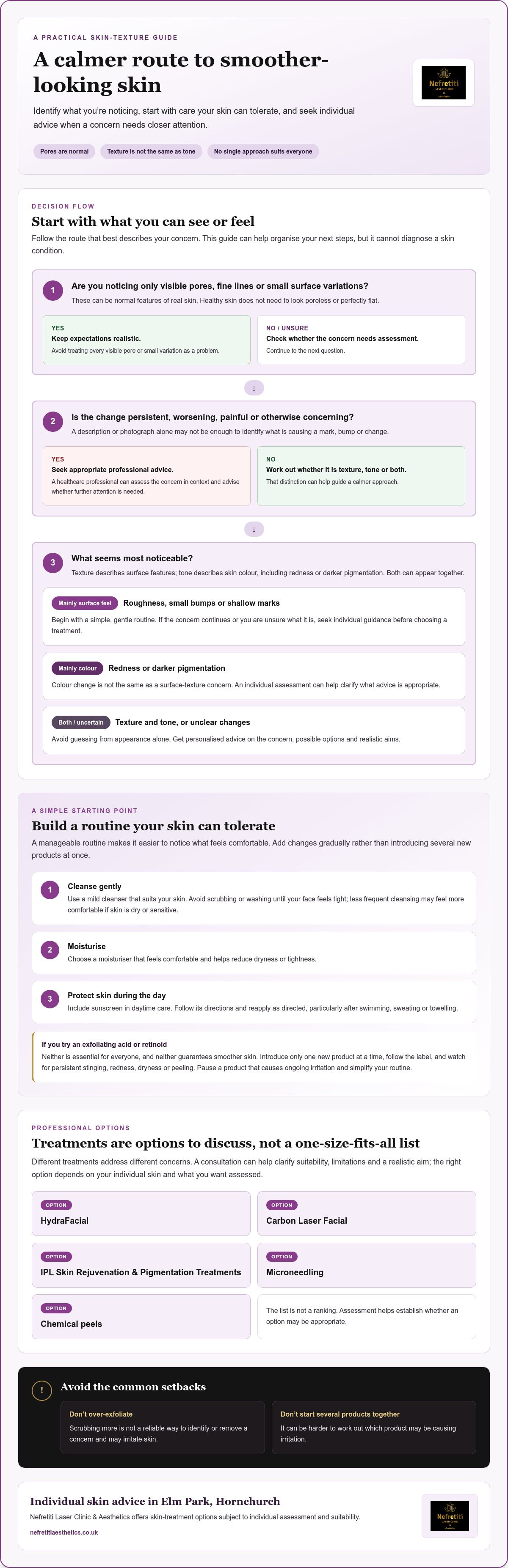
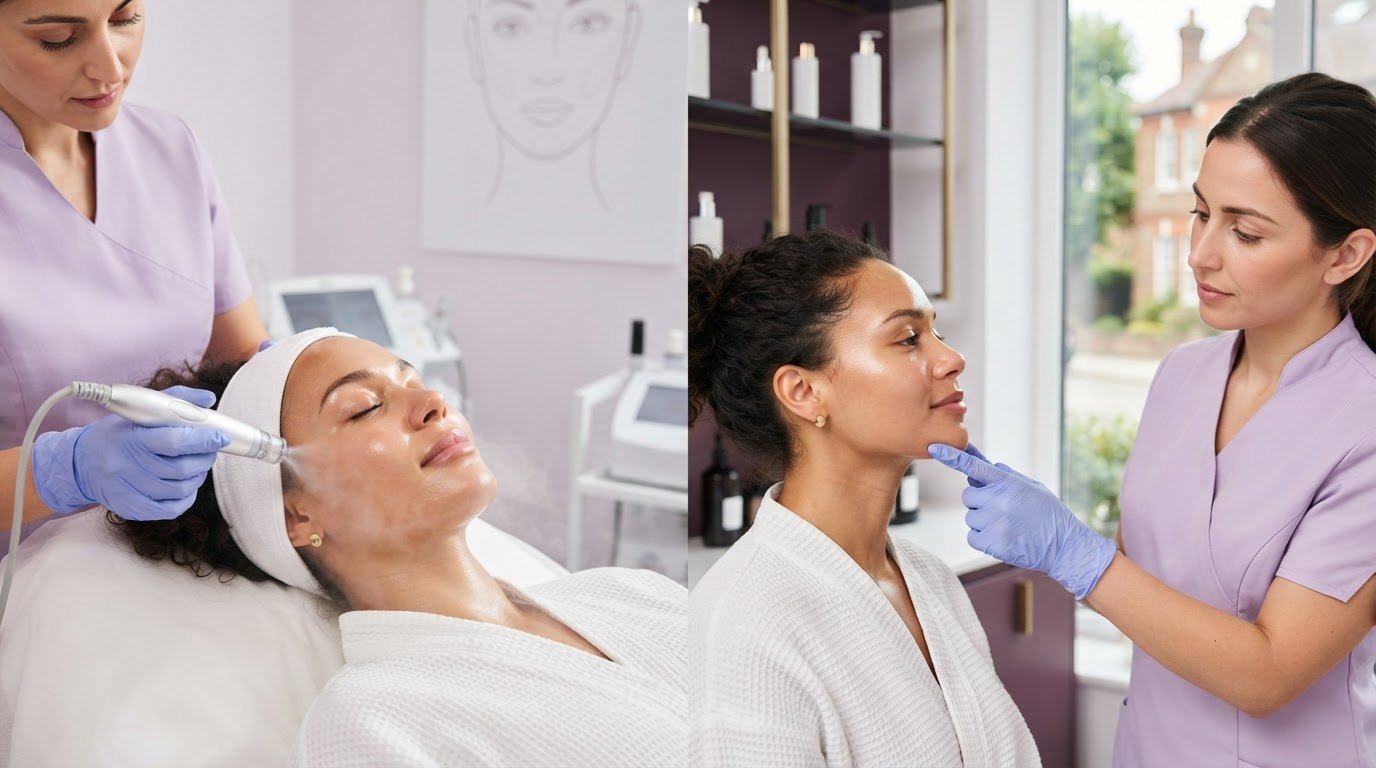
These options belong to different treatment categories. HydraFacial is a facial treatment, microneedling uses fine needles, and chemical peels use exfoliating formulations. They differ in approach and potential recovery, so a more intensive treatment isn’t automatically better. Explore HydraFacial treatment details as one option to discuss.
Acne treatments and pigmentation treatments also address distinct concerns. Active acne may need an acne-focused assessment, while pigmentation relates to colour rather than surface feel alone. Treating the wrong concern may not deliver the change you’re seeking. At Nefretiti Laser Clinic & Aesthetics, these treatments are offered following individual assessment, with discussion of expected benefits, limitations and recovery. Suitability and results vary, and a considered plan is more useful than choosing the strongest-sounding treatment.
Avoid common skin-texture setbacks and know when to seek professional advice
Trying to speed up progress can sometimes make skin less comfortable. A routine that leaves your face sore or persistently irritated isn’t a sign that it’s working harder. If you’re considering how to improve skin texture on face, protect your skin from avoidable irritation and give yourself space to reassess what’s helping.
Over-exfoliating: Scrubbing or using exfoliating products too often may leave skin dry, tight or uncomfortable. More exfoliation isn’t necessarily more effective.
Starting several products together: If irritation develops, it becomes difficult to identify which new product may be responsible.
Chasing poreless skin: Visible pores and natural variation are normal. Trying to remove every mark or uneven area can lead to unnecessary product use or treatments that don’t match your concern.
If your skin becomes irritated, simplify or pause the products you’ve recently added rather than introducing stronger ingredients or more steps. Persistent discomfort is a reason to stop and seek appropriate advice, not to intensify your routine.
How can you tell if your routine is too harsh?
Pay attention to how your skin feels, not just how it looks. Ongoing burning, stinging, soreness, redness or uncomfortable dryness after using a product may mean your routine needs reconsideration. Don’t add more active ingredients to counter these effects. Doing so can make it harder to identify a trigger. Pause products that appear to be causing persistent irritation and seek suitable advice if it continues or concerns you.
When should you seek advice before trying a treatment?
Arrange an assessment if you’re unsure what’s causing a concern, or if a change is persistent, painful, inflamed or worsening. Before discussing an aesthetic treatment, be ready to describe your skin history and the products you currently use, including anything that has caused a reaction. This context helps the practitioner consider suitability and realistic expectations. Aesthetic treatments aren’t a substitute for medical care or diagnosis.
If a mark, bump or other skin change is concerning, changing or painful, speak to an appropriate healthcare professional, such as your GP, rather than assuming it’s a cosmetic texture issue. Seek medical advice for symptoms that need assessment. A clinic consultation can help you discuss aesthetic options, but it shouldn’t delay care for a possible medical concern.
Take a measured approach: pause what irritates your skin, avoid trying to force poreless results and get individual advice when a change doesn’t settle or worries you.
Explore personalised skin-texture options at Nefretiti Laser Clinic & Aesthetics
Once you’ve considered your routine and the concern you’d like to address, a personal consultation can help you explore appropriate next steps. At Nefretiti Laser Clinic & Aesthetics, the discussion centres on your skin concern, your aims and whether a professional option may be suitable. It’s a chance to ask questions and understand potential benefits and limitations before deciding what feels right for you.
What can you expect from an initial consultation?
For new clients, Nefretiti Laser Clinic & Aesthetics offers a free consultation and patch test. You can explain what you’ve noticed, how long it has concerned you and what you currently use on your skin. Sharing relevant skin history and previous reactions helps inform a thoughtful discussion. A consultation helps you consider possible options, but it doesn’t mean a particular treatment or outcome is guaranteed.
Depending on your concern, the clinic offers Carbon Laser Facial, IPL Skin Rejuvenation & Pigmentation Treatments, HydraFacial, microneedling and chemical peels. These approaches aren’t interchangeable. The discussion depends on whether your main concern is surface feel, visible colour changes or something else. Suitability and expected results vary, and any plan should be tailored following assessment. The practitioner can explain the patch test and its relevance to the treatment being considered.
If you’re unsure whether a concern is related to acne, pigmentation or another skin issue, reviewing skin conditions and treatment options may help you describe what you’d like assessed. For persistent, painful or changing symptoms, seek appropriate healthcare advice rather than relying on an aesthetic consultation as a diagnosis.
How can local clients take the next step?
Nefretiti Laser Clinic & Aesthetics is based in Elm Park, Hornchurch, Essex, and welcomes clients from Hornchurch, Romford, Upminster, Rainham, Dagenham, Gidea Park, Harold Wood and Harold Hill, as well as across Essex. The clinic offers a private setting for a personalised conversation about your goals and suitable options.
Before your appointment, it may help to note the products you use, anything that has irritated your skin and the changes you hope to see. You don’t need to arrive with a treatment already chosen. A useful consultation should leave you with a clearer understanding of what may suit your concern, what the limitations are and whether you’d like to proceed.
Improving the appearance of skin texture is a personal process, not a promise of poreless skin or a single solution for everyone. Take the next step only if it feels right for you. If you’d like to discuss your concerns in a calm, supportive setting, you’re warmly invited to book a consultation with Nefretiti Laser Clinic & Aesthetics.
Take a considered next step towards skin confidence
Your next step doesn’t need to be a treatment. A thoughtful conversation can help you decide whether to continue with home care or explore a professional option suited to your concern. If you’re still weighing how to improve skin texture on face, focus on an approach that feels right for your skin, with realistic expectations rather than pressure to achieve poreless results.
At Nefretiti Laser Clinic & Aesthetics, personalised care is offered in a private treatment environment, with natural-looking results as the aim, not a guarantee. The clinic is fully licensed and insured, and a consultation gives you space to discuss your goals and ask questions before deciding what feels appropriate.
You don’t need to have everything figured out beforehand. Bring your questions and take the time you need to feel informed and comfortable about what comes next.
A calm, considered plan can be a positive first step towards feeling more confident in your skin.
Frequently Asked Questions
Can facial skin texture improve without professional treatment?
Yes, some mild roughness linked to dryness or irritation may look and feel better with simple, suitable home care. Changes caused by acne scarring or other persistent concerns may not respond in the same way, so expectations depend on the cause. If you’re wondering how to improve skin texture on face, start by noticing what bothers you most and whether it changes with gentle care, rather than assuming a treatment is essential.
How long does it take to notice a change in skin texture?
There isn’t one reliable timeframe, because it depends on what’s causing the texture, your skin and the approach used. Comfort may improve before visible marks do, while acne scarring may need a different assessment from temporary dryness. To judge changes fairly, take occasional photographs in similar lighting and at a similar distance. Daily close-up checks can make normal fluctuations seem more significant than they are.
Can I use retinol and exfoliating acids in the same routine?
Combining them can increase the chance of irritation, particularly if your skin isn’t accustomed to either ingredient. Don’t assume that using both will improve results faster. Check each product’s directions, and seek advice from a suitable healthcare professional if you use prescription skincare, have a skin condition or are unsure how the ingredients fit together. If irritation develops, stop the products causing discomfort and seek appropriate guidance.
Does makeup make textured skin worse?
Makeup doesn’t automatically worsen texture, although a product that irritates your skin or doesn’t suit you may cause discomfort or contribute to blocked pores. Remove make-up gently before bed, clean brushes and sponges regularly, and avoid sharing them. If a particular foundation seems to coincide with new bumps, stop using it for a while and observe whether things settle. Persistent or worsening changes deserve individual advice.
Can dehydration make facial skin feel rough?
Skin that lacks surface moisture can feel tight, flaky or rough, though that sensation doesn’t prove you’re generally dehydrated. A comfortable moisturiser may help with dryness, but drinking extra water won’t necessarily resolve every textural concern. Consider whether weather, frequent washing or a new skincare product could be contributing. If roughness persists despite gentle care, seek advice rather than assuming dehydration is the only cause.
Should I exfoliate my face every day?
No, daily exfoliation isn’t necessary for everyone and may leave skin irritated, dry or sore, especially if you’re using other active skincare. Follow the product directions rather than copying someone else’s routine, and don’t use a scrub to try to remove bumps forcefully. If your skin becomes persistently uncomfortable, stop exfoliating and seek advice. The right routine depends on your skin and the product involved.
What should I do if a new skincare product irritates my face?
Stop using the product and gently rinse your skin if it remains on your face. Keep care simple while you assess the reaction, and don’t reapply it to test whether the irritation returns. Seek advice if symptoms persist, worsen or concern you. For marked swelling or difficulty breathing, seek urgent medical help. Keep the packaging or note the product name and ingredients to share with a healthcare professional.

Comments