


Black Ink Tattoo Removal in Hornchurch: Pain and Skin Tones
Black ink often responds well to laser treatment, but removal can still be uncomfortable. If you’re considering black ink tattoo removal in Hornchurch, expect some discomfort during treatment. Cooling devices or topical numbing cream may help reduce it.
It’s understandable to want clear answers before deciding, especially if you’re concerned about pain or how treatment may affect your skin. Home removal creams and devices can be ineffective and may cause burns or scarring. Laser suitability also depends in part on selecting a wavelength appropriate for your skin tone.
This guide explains what laser tattoo removal may feel like, why black ink can respond well, and what to consider about home methods, different skin tones and local clinics. You’ll also learn what to expect during treatment and how to take a considered next step.
Table of Contents
How does laser tattoo removal work?
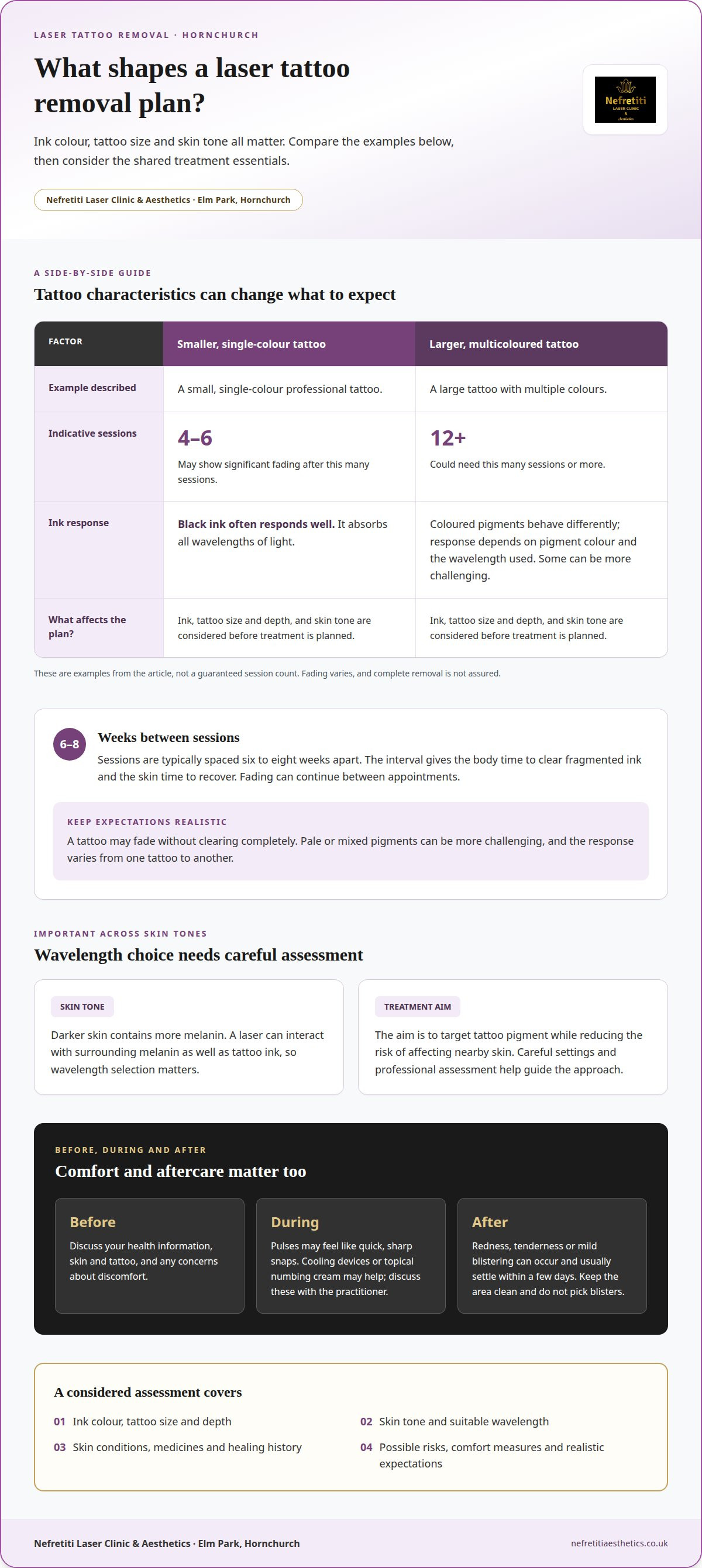
Laser treatment sends brief pulses of light into tattoo pigment beneath the skin. The pigment absorbs the energy and breaks into smaller particles. The body’s immune system gradually clears these fragments, so fading continues between appointments. Black ink often responds particularly well because it absorbs all wavelengths of light. Coloured pigments behave differently, and their response depends on the colour and the wavelength used.
Black tattoos may fade more readily than some coloured designs, but that doesn’t mean every tattoo will clear completely. A small, single-colour professional tattoo might show significant fading after four to six sessions. A large, multicoloured tattoo could need twelve or more sessions. Pale or mixed pigments can be more challenging. An assessment considers the ink, tattoo size and depth, and skin tone before treatment is planned.
For black ink tattoo removal in Hornchurch, ask how the clinic assesses each pigment and sets expectations. If the tattoo is near an eyebrow, discuss how treatment may affect nearby hairs. Laser exposure can alter hair colour, so protection and appropriate treatment settings should be part of the conversation.
Are tattoo removal clinics in England required to meet specific safety or licensing rules? A clinic should explain its safety procedures, how it assesses suitability and the practitioner’s relevant training. Ask about these points before deciding whether to proceed.
How long should I wait between tattoo removal sessions? Sessions are typically spaced six to eight weeks apart. This interval gives the body time to clear ink fragments and the skin time to recover.
What are the risks and side effects of laser tattoo removal? Redness and mild blistering can occur and usually settle within a few days. Follow the aftercare instructions, keep treated skin clean and don’t pick blisters. Your assessment should cover possible risks for your skin and tattoo.
Does tattoo removal hurt?
Laser tattoo removal can feel uncomfortable, but the sensation differs between people and treatment areas. Some describe the pulses as sharp, quick snaps against the skin. The feeling is brief, though repeated pulses can become tiring during a longer appointment. A small tattoo may take less time to treat than a larger design, which can affect how long you experience the sensation.
Skin sensitivity, tattoo size and placement all affect comfort. Areas with thinner skin or close to bone may feel more sensitive than fleshier areas. The pigment and treatment settings matter too. A consultation gives you time to discuss previous reactions, concerns about pain and whether treatment is suitable for your skin and tattoo.
Cooling devices or topical numbing cream may help reduce discomfort. Discuss these options with the practitioner before treatment rather than applying a product without guidance. During the appointment, let the practitioner know if the sensation becomes difficult to manage. Where appropriate, a pause can give you time to regroup before continuing.
Before treatment: share health information and discuss any numbing or cooling options.
During treatment: describe how the pulses feel and speak up if you need a pause.
After treatment: follow the aftercare instructions and avoid picking or rubbing the area.
After treatment, the skin may be red, tender or mildly blistered. These reactions usually settle within a few days. Keep the area clean and follow the practitioner’s advice, particularly if your skin becomes increasingly uncomfortable or a reaction concerns you. Don’t pick blisters, as this can interfere with healing.
Give the skin time to settle before judging how much the tattoo has faded. The body clears fragmented ink gradually, so changes may continue between appointments. A realistic treatment plan considers comfort and recovery, not just how soon sessions can be arranged.
If pain is your main concern, raise it during a tattoo removal consultation. A conversation beforehand can help you understand the comfort measures available and what to expect during treatment.
Laser suitability for different skin tones
Laser tattoo removal can be considered across skin tones, but treatment settings need careful selection. Darker skin contains more melanin, the pigment that gives skin its colour. A laser can interact with surrounding melanin as well as tattoo ink, so wavelength choice matters. The aim is to target tattoo pigment while reducing the risk of affecting nearby skin.
During an assessment, the practitioner considers your skin tone alongside the tattoo’s colour, size, location and age. They’ll also need to know about skin conditions, medicines and any previous healing problems. These details help identify possible reasons to delay treatment or take extra care. Discuss any recent change in skin colour, irritation around the tattoo or history of unusual scarring before proceeding.
Laser treatment breaks ink into smaller fragments, which the body gradually clears. Black ink often responds well, while some coloured pigments can be more challenging. Skin tone affects the safe choice of laser wavelength, but the ink itself also influences the likely response. Fading can be gradual, and complete removal isn’t assured. An assessment helps set realistic expectations for your tattoo.
Removal and a cover-up are different approaches. Laser sessions aim to fade or remove existing pigment, while a cover-up places new tattoo artwork over the old design. If you’re considering new artwork, fading the original first may give a tattoo artist more design options. A few laser sessions may fade a tattoo enough to give a cover-up artist more creative freedom, though the amount of fading varies.
Some people choose removal because they want the tattoo lighter rather than gone. Others may prefer a cover-up without laser treatment. Discuss your desired outcome before choosing an approach. For darker skin tones, careful wavelength selection remains central to treatment planning, and the practitioner should explain possible effects on surrounding skin pigment before treatment begins.
Is home tattoo removal safe?
Home tattoo removal creams and devices aren’t a safe substitute for laser treatment. Creams may fail to remove ink particles and can cause chemical burns or scarring. Home devices can also injure skin when used without a professional assessment of the tattoo and surrounding area. Avoid scraping, cutting or applying corrosive substances to the tattoo.
Professional laser treatment breaks ink into fragments beneath the skin, which the body gradually clears. Home methods don’t offer the same controlled approach to targeting pigment. A consultation helps assess the tattoo, skin tone and healing history before treatment, and gives you time to discuss pain, likely reactions and appropriate aftercare.
Redness and mild blistering can occur after laser treatment and usually settle within a few days. Keep the treated area clean, and don’t pick blisters or scabs. Picking can disturb healing skin and increase the risk of scarring. Avoid sun exposure on the treated area while it recovers, and follow the practitioner’s specific aftercare instructions.
Give the skin time to settle between appointments. Tattoo removal sessions are typically spaced six to eight weeks apart, allowing time for recovery and for the body to clear ink particles. Don’t schedule another session while the area is still healing. The practitioner can assess your skin before treatment continues.
Clean gently: keep the treated skin clean and follow the aftercare instructions provided.
Leave blisters and scabs alone: don’t pick, scratch or peel healing skin.
Protect the area: avoid sun exposure during recovery.
Allow healing time: sessions are typically six to eight weeks apart.
Avoid showering the treated area for 24 to 48 hours after a session. If discomfort or a skin reaction concerns you, contact the practitioner for advice rather than trying another home remedy. A careful recovery routine supports healing; it can’t make tattoo fading immediate, since the body clears fragmented ink gradually.
Tattoo removal clinics in Hornchurch and nearby Romford
When choosing a tattoo removal clinic near Hornchurch or Romford, start by understanding how it assesses your tattoo. A consultation should cover ink colour, size, location and age, as well as your skin tone and healing history. These details shape the treatment plan, including suitable laser settings and spacing between sessions. A useful discussion explains what treatment can and cannot achieve for your particular tattoo.
Ask how the practitioner will explain possible reactions, recovery and aftercare before treatment begins. Redness and mild blistering can follow laser treatment, so clear advice on keeping the area clean and avoiding sun exposure matters. The clinic should also explain what to do if you have concerns during healing. You should leave understanding the process and next steps.
Compare local options by looking for a clear, individual assessment rather than a one-size-fits-all promise. A black tattoo on one person’s skin, for example, may need different settings from a coloured tattoo on another. Ask what factors shape the plan and how progress will be reviewed. The immune system gradually clears fragmented ink, so visible fading develops over time.
Discuss the tattoo: cover its colours, size, age and placement.
Review suitability: include skin tone, health information and previous healing concerns.
Understand the plan: ask about treatment intervals, expected fading and possible reactions.
Clarify aftercare: make sure instructions explain how to care for treated skin.
Sessions are typically spaced six to eight weeks apart, allowing the body time to clear ink fragments. Keep this interval in mind when comparing proposed schedules. A much shorter schedule needs a clear explanation of how it accounts for skin recovery and the immune system’s role.
Hornchurch and Romford are convenient local search areas, but location alone can’t show whether a treatment plan suits you. Focus on the quality of the assessment, clear aftercare advice and a realistic discussion of fading. These points can help you make an informed choice for tattoo removal close to home.
Clinic location and areas served
Nefretiti Laser Clinic & Aesthetics is based in Elm Park, Hornchurch, Essex. Its location is convenient for people considering tattoo removal in Hornchurch and nearby parts of East London. A local clinic can make attending appointments more practical, particularly when treatment involves multiple visits and time for skin recovery between them.
Clients travel from Romford, Upminster and Rainham, as well as Gidea Park, Harold Wood and Dagenham. The clinic also welcomes people from Brentwood, across Essex and from East London. These areas give readers a clear sense of the communities served, without assuming everyone has the same journey or travel needs.
For a first appointment, allow time for the consultation as well as treatment. The practitioner assesses your tattoo, skin tone and relevant health information before discussing suitability. For example, a black tattoo on darker skin may call for particularly careful wavelength selection to reduce the risk of affecting surrounding skin pigment.
Local access can also matter after treatment. Redness or mild blistering may occur, and treated skin needs careful aftercare at home. Before setting off, consider how you’ll travel comfortably if the area feels tender afterwards. Follow the aftercare advice provided, including keeping the area clean and avoiding sun exposure during recovery.
Elm Park, Hornchurch and Romford are useful reference points when planning a visit. Upminster, Rainham, Dagenham, Gidea Park, Harold Wood and Harold Hill are among the surrounding areas served. Allow for the journey and appointment time when making plans. A consultation lets you discuss your goals and understand the proposed treatment approach before deciding on next steps.
For residents searching locally, the key is finding a convenient location and a clear, individual assessment. Nefretiti Laser Clinic & Aesthetics offers a local setting in Elm Park for people from Hornchurch and surrounding Essex and East London communities.
Nefretiti Laser Clinic & Aesthetics: laser tattoo removal
Nefretiti Laser Clinic & Aesthetics offers laser tattoo removal for people considering a change to unwanted ink. A consultation is a useful first step if you’re unsure how your tattoo may respond, concerned about discomfort or weighing removal against a cover-up. It gives you time to explain your goals and discuss an approach before treatment begins.
The assessment considers your tattoo’s colour, size, location and age, alongside your skin tone and relevant health information. These factors influence suitability, treatment planning and likely fading. For example, the practitioner needs to consider surrounding skin pigment when selecting an approach for darker skin tones. Sharing previous healing concerns or medicines helps inform the discussion.
Treatment is usually a course rather than a single appointment. Sessions are typically spaced six to eight weeks apart, allowing the body time to clear fragmented ink and the skin to recover. The number of sessions depends on factors such as the tattoo’s characteristics and how it responds. The consultation is an opportunity to discuss a realistic plan, possible side effects and aftercare.
Clarify your aim: explain whether you want full removal, fading, or a lighter base for a cover-up.
Discuss suitability: share relevant health information and ask how skin tone and ink colour affect planning.
Understand recovery: discuss likely skin reactions and the aftercare needed between appointments.
Some people want to remove a small black design; others have larger or multicoloured tattoos and need to understand the limitations. An individual assessment brings these differences into the conversation rather than relying on a general estimate. It also gives you a chance to ask about comfort and what happens if your skin needs more recovery time.
Laser tattoo removal isn’t the right approach for every goal or situation. Following a consultation, the treatment plan should reflect suitability, your desired outcome and how your skin responds. Take time to consider the information before deciding whether to proceed.
Contact Nefretiti Laser Clinic & Aesthetics to discuss a tattoo removal consultation.
Take the next step with confidence
Deciding what to do with a tattoo is personal. You may want it lightened for a future cover-up or simply want to understand whether removal suits your goals. A conversation about black ink tattoo removal in Hornchurch can turn general information into a plan that considers your tattoo, skin and preferred outcome.
Nefretiti Laser Clinic & Aesthetics offers laser tattoo removal, as well as laser hair removal and Carbon Laser Facials. If tattoo removal is your focus, a consultation gives you the opportunity to discuss your aims, raise concerns and understand the proposed approach before deciding whether to proceed. Take the time you need to make an informed choice.
Take the time you need to feel informed. A thoughtful first step can make the way ahead clearer, whether you’re exploring removal or weighing your options.
Frequently Asked Questions
How Many Sessions Will You Need?
There isn’t one session count that suits every tattoo. The treatment plan depends on the design’s size, ink depth, colour, location and your intended outcome. During assessment, the practitioner can discuss whether you want complete removal or simply lighter ink for a cover-up. Progress is reviewed as treatment continues, so the plan can reflect how your tattoo and skin respond rather than rely on a fixed estimate.
How is the Solution applied?
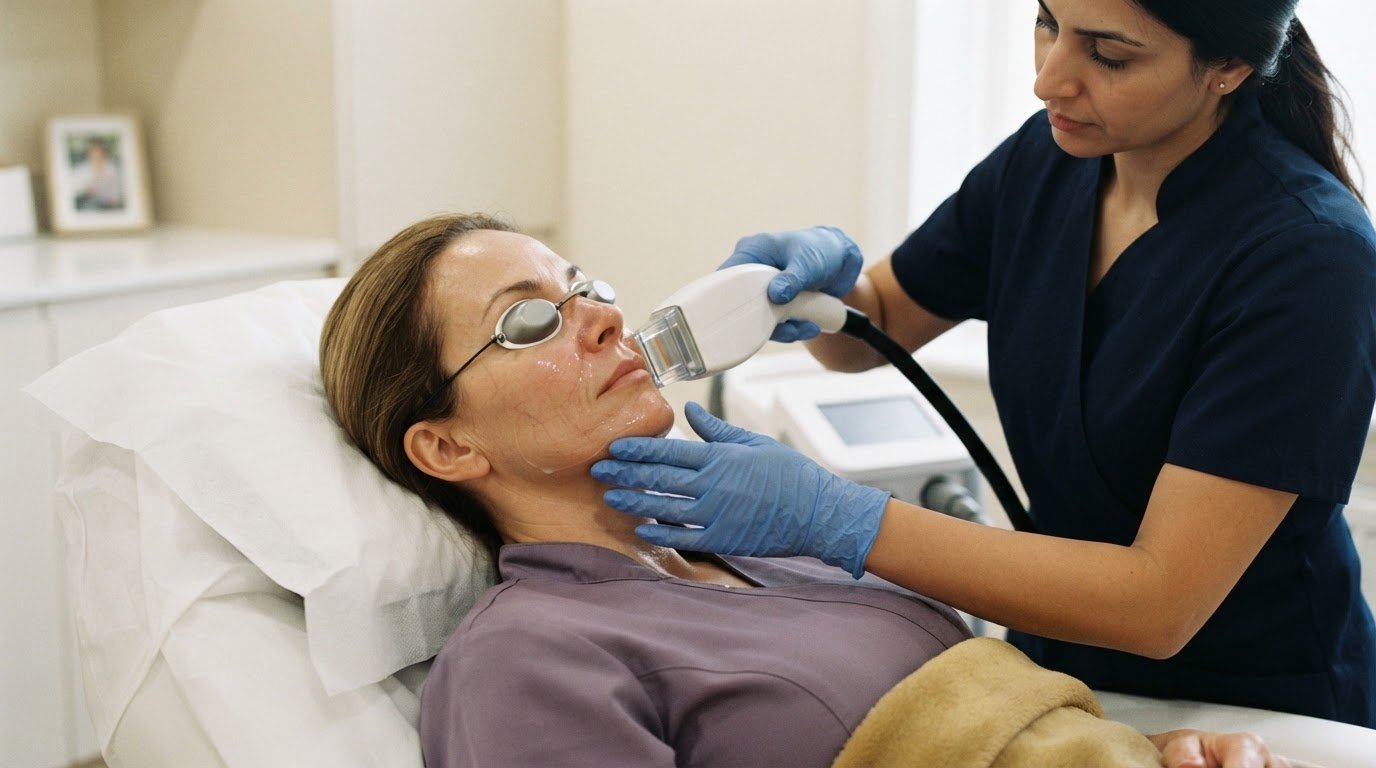
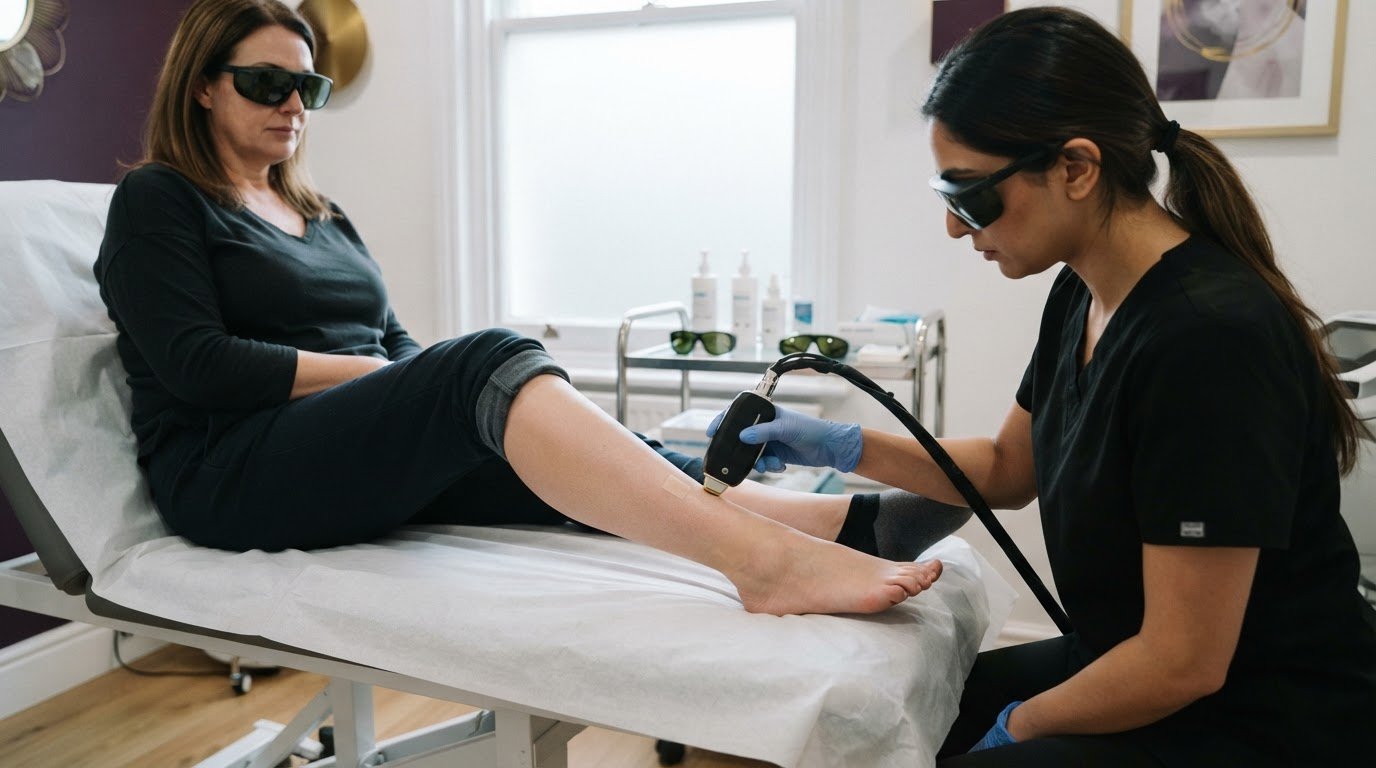
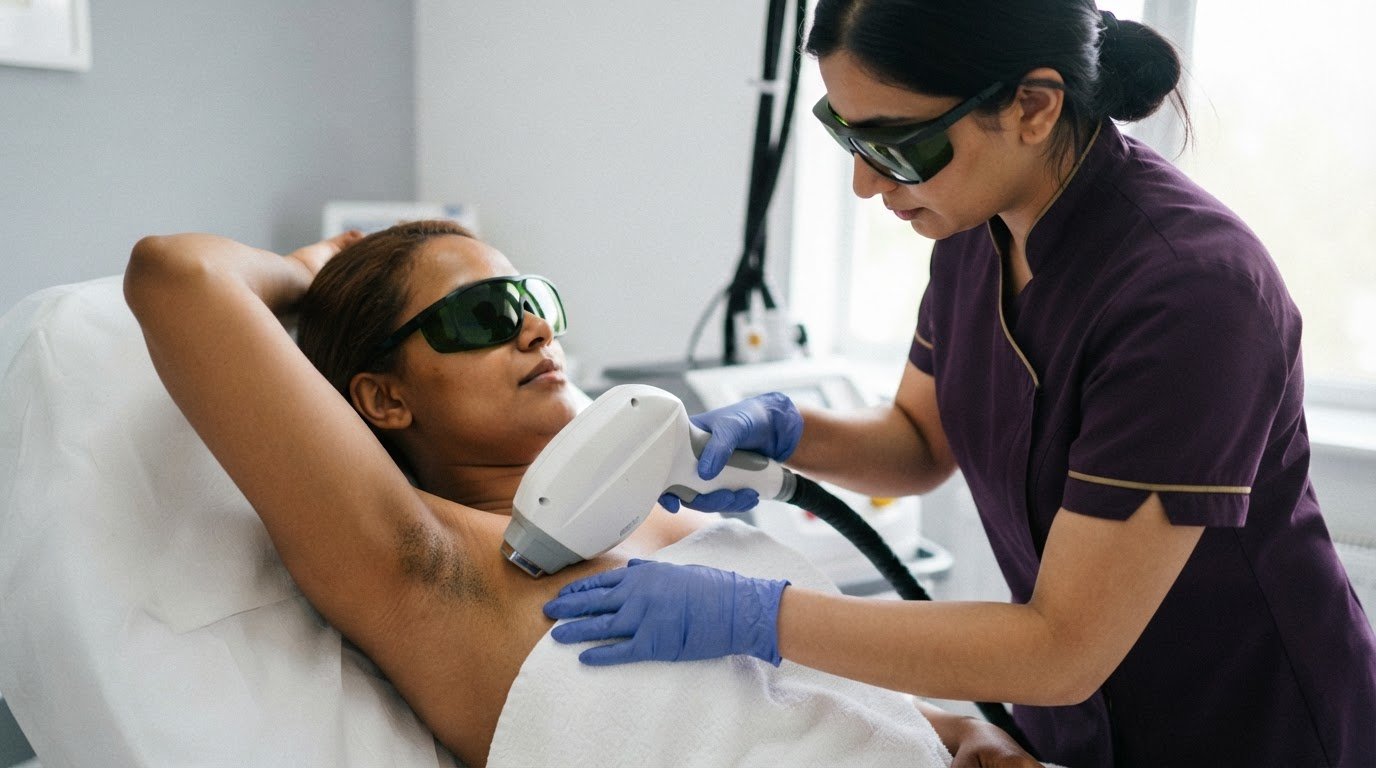
Laser tattoo removal doesn’t involve applying a liquid solution to the tattoo. The practitioner uses a laser handpiece to deliver pulses of light to ink beneath the skin. The light energy fragments the pigment, which the body gradually clears. Before treatment, the tattoo and surrounding skin are assessed, and protective measures are used during the procedure. Your consultation explains the process and gives you time to ask questions.
What Can I Expect After the Procedure?
After treatment, the area can look red and feel tender, and mild blistering can occur. The tattoo’s appearance may change as the skin recovers and the body clears ink fragments. Don’t judge the final fading immediately after an appointment. Follow the aftercare advice and raise any reaction that concerns you with the practitioner.
What aftercare do I need to follow?
Keep the treated area clean, avoid picking blisters or scabs, and protect it from sun exposure while healing. Follow the instructions provided for your individual treatment, rather than adding creams or home remedies without guidance. Avoid showering the treated area for 24 to 48 hours after a session. If you’re unsure how to care for a particular reaction, contact the clinic for advice.
Where can I get black ink tattoo removal in Hornchurch?
Nefretiti Laser Clinic & Aesthetics provides laser tattoo removal in Elm Park, Hornchurch. The clinic is at 5 Tadworth Parade, Elm Park, Hornchurch, RM12 5AS. A consultation offers a chance to discuss your tattoo, desired outcome and suitability before deciding on treatment. The location also serves people travelling from nearby areas, including Romford and Upminster.
Which clinics near Hornchurch offer laser tattoo removal for black ink?
Nefretiti Laser Clinic & Aesthetics offers laser tattoo removal in Elm Park, Hornchurch. Its local clinic is accessible to people from Romford, Rainham and Upminster. A consultation can clarify how the tattoo’s size, ink and placement inform treatment planning. The clinic provides a patch test as part of its treatment process, giving you an opportunity to discuss the procedure before proceeding.
What laser types are used to remove black tattoo ink?
Nefretiti Laser Clinic & Aesthetics uses a UK medical-grade, multi-wavelength laser system with three separate wavelengths: Alexandrite 755 nm, Diode 810 nm and Nd 1064 nm. Each wavelength is delivered through its own independent handpiece. The appropriate approach depends on the tattoo and skin assessment. Your consultation is the time to discuss how the system’s options relate to your individual treatment plan.
How many sessions are needed to remove a black tattoo?
A small, single-colour tattoo applied by a professional might fade significantly after four to six laser sessions. Larger, denser or more complex tattoos may need more treatment. Black ink often responds well, but colour alone can’t guarantee complete removal. Tattoo size, depth, placement, age and skin response all influence the plan. An assessment helps set expectations for your specific design and desired level of fading.
Comments