


HydraFacial vs Microdermabrasion: Which Facial Suits Your Skin?
The gentler-sounding facial isn’t automatically the right one for your skin. In the comparison of HydraFacial vs microdermabrasion, the key difference is how each treatment works: microdermabrasion mechanically exfoliates the skin’s surface, while HydraFacial combines exfoliation with cleansing and hydration. Your skin goals, current skin condition and tolerance matter more than choosing a universal “winner”.
If treatment descriptions have left you unsure whether these facials are interchangeable, you’re not alone. Comfort, possible downtime and suitability can vary, and neither treatment guarantees the same result for everyone. Before deciding, consider what you want from a facial, whether your skin is currently irritated and what products or treatments you’ve used recently. A personalised assessment can help set realistic expectations.
In this guide, we’ll explain how the two treatments differ, what concerns they may help address and what to consider when choosing between them. Nefretiti Laser Clinic & Aesthetics offers HydraFacial in a calm, private setting in Elm Park, Hornchurch. A free consultation and patch test for new clients provide an opportunity to discuss your skin, preferences and treatment options.
Table of Contents
HydraFacial vs microdermabrasion: what is the difference?
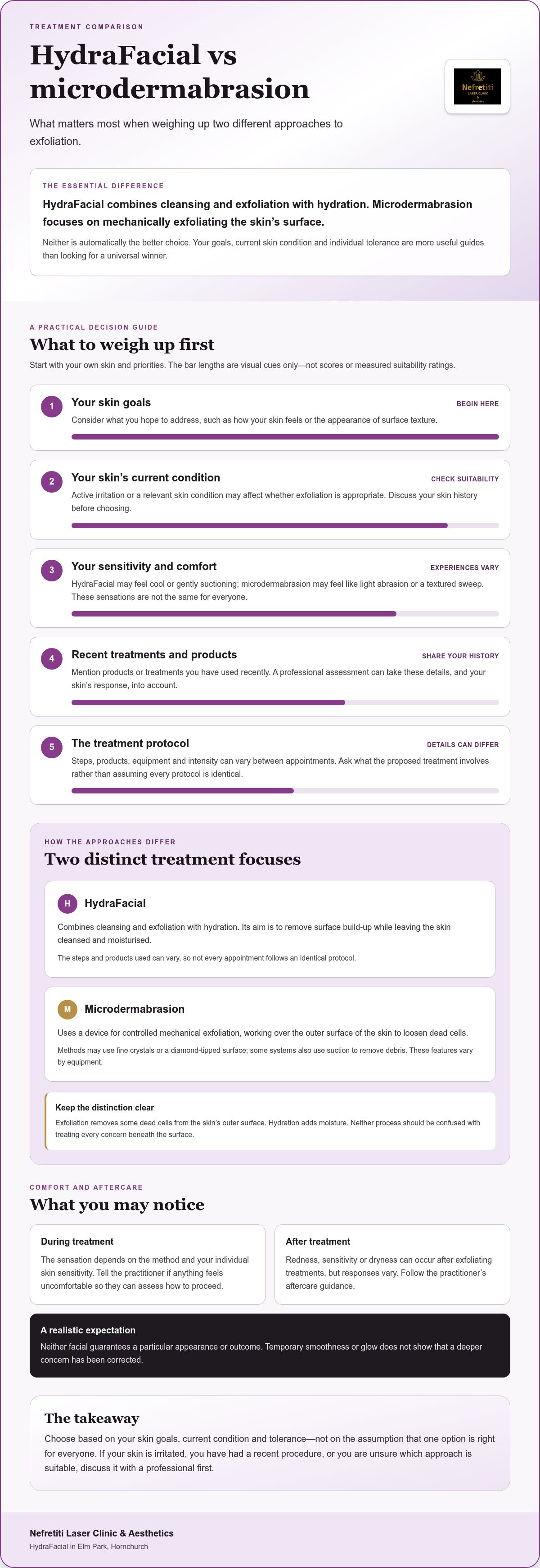
Both facials involve exfoliation, but they use different approaches. HydraFacial combines cleansing and exfoliation with hydration, while microdermabrasion focuses on mechanically exfoliating the skin’s surface. Neither is automatically the better choice. The right option depends on your skin, your priorities and how it responds to treatment.
What is HydraFacial?
HydraFacial is a facial treatment that brings together cleansing, exfoliation and hydration. It aims to remove surface build-up while leaving the skin cleansed and moisturised. The steps and products used can vary, so don’t assume every appointment follows an identical protocol. At Nefretiti Laser Clinic & Aesthetics, a free consultation and patch test for new clients offer an opportunity to discuss the treatment and your skin goals before proceeding.
What is microdermabrasion?
Microdermabrasion is a form of controlled mechanical exfoliation. A practitioner uses a device to work over the outer surface of the skin and loosen dead cells. Depending on the method, equipment may use fine crystals or a diamond-tipped surface, and some systems also use suction to remove debris. These are variations, not features of every treatment. The technique and intensity can differ between devices and appointments.
In plain English, exfoliation means removing some dead cells from the skin’s outer surface. It doesn’t mean that a facial treats every concern beneath the surface, and the effect can differ between people. Microdermabrasion places more emphasis on physical buffing. HydraFacial includes cleansing and hydration alongside exfoliation, so the focus and experience are distinct, even though both treatments exfoliate.
That difference can help you frame the HydraFacial vs microdermabrasion decision. Consider whether you’re drawn to a facial that includes hydration alongside exfoliation, or one centred on mechanical surface exfoliation. Your priorities may depend on what you hope to address, such as how your skin feels or the appearance of surface texture. These preferences alone don’t establish suitability, so a professional assessment should take your skin’s current condition into account.
Both treatments have limitations. They aren’t interchangeable, and neither guarantees a particular appearance or outcome. Skin concerns, recent treatments and individual sensitivity can affect whether exfoliation is appropriate and how it should be approached. If your skin is irritated or you’re unsure which option fits your needs, discuss this with a professional before proceeding.
Nefretiti Laser Clinic & Aesthetics offers HydraFacial in Elm Park, Hornchurch. A personalised discussion can help you understand the treatment and whether it may suit your skin. Details about the clinic’s HydraFacial treatment in Hornchurch can also help you consider your options.
How HydraFacial and microdermabrasion work on the skin
Both treatments involve exfoliation, but it helps to separate that step from hydration. Exfoliation removes some dead cells from the skin’s outer surface; hydration adds moisture to the skin. Neither process should be confused with treating deeper skin changes. The exact sequence, products and equipment can vary between protocols, so the outline below describes general treatment principles rather than promising what every appointment involves.
The treatment process behind HydraFacial
A HydraFacial generally combines cleansing and exfoliation with hydration. Broadly, the practitioner prepares the skin, carries out the steps suited to the appointment, then applies or delivers hydrating products as part of the facial. The aim is to leave the skin cleansed and moisturised. Exfoliation itself does not hydrate, and not every protocol uses the same device, products or steps.
The treatment process behind microdermabrasion
Microdermabrasion uses a device to exfoliate the surface in a controlled way. A practitioner moves the treatment head over the skin, loosening surface cells; some methods also use suction to remove debris. Equipment can differ, including crystal-based and diamond-tip approaches, and the level of exfoliation is not identical across devices or appointments. The treatment focuses on physical exfoliation, rather than adding hydration as its central step.
What you may notice during treatment
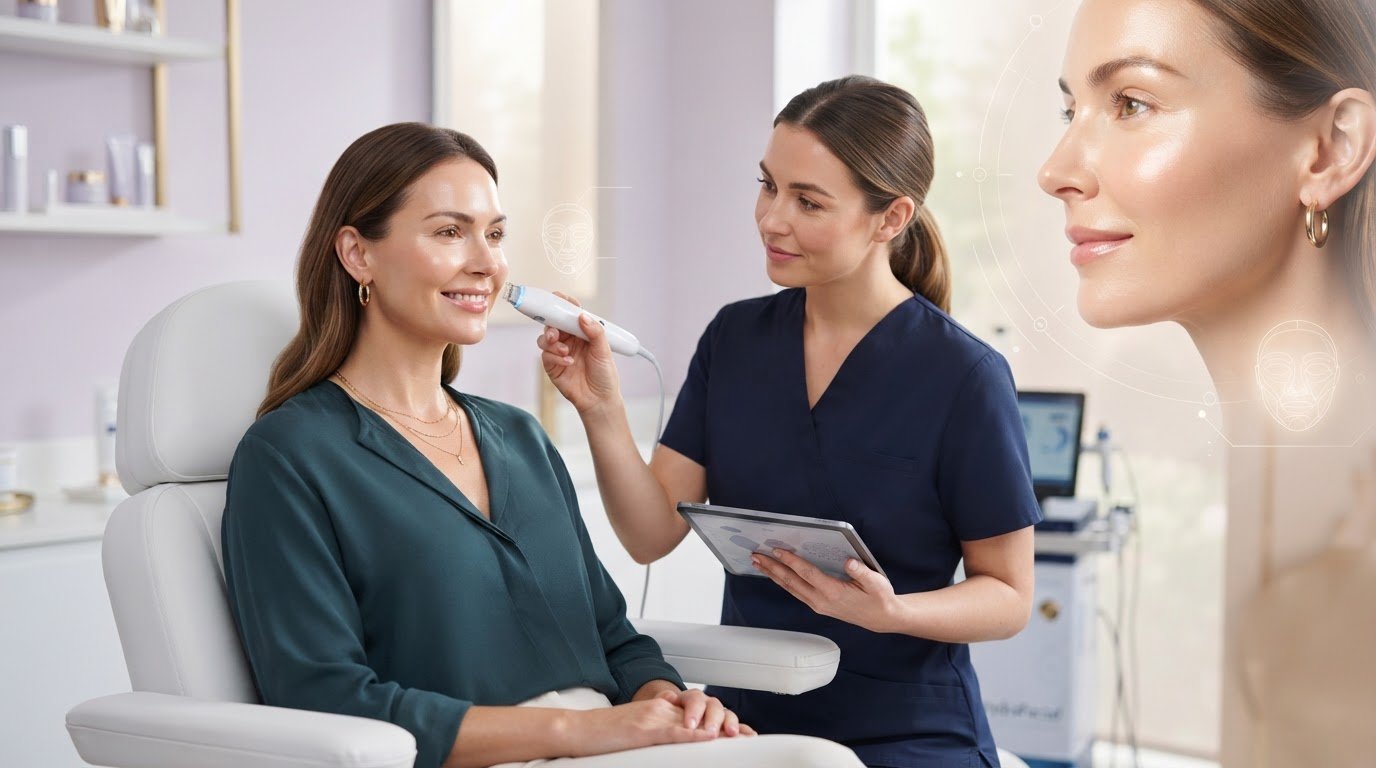
The sensation depends on the method and individual skin sensitivity. A HydraFacial may feel cool or like a gentle suctioning movement as the handpiece passes over the skin. Microdermabrasion can feel like light abrasion or a textured sweep. These are general descriptions, not guarantees of comfort. Tell the practitioner if a sensation feels uncomfortable so they can assess how to proceed.
After either facial, your skin may feel temporarily different. Redness, sensitivity or dryness can occur after exfoliating treatments, but the response varies. How the skin looks immediately afterwards doesn’t predict a lasting result. Follow the practitioner’s aftercare guidance, and don’t treat temporary smoothness or glow as evidence that a deeper concern has been corrected.
In the HydraFacial vs microdermabrasion comparison, the key process distinction is not simply “gentle” against “strong”. One approach combines exfoliation with cleansing and hydration; the other centres on device-led mechanical exfoliation. Skin condition, the chosen protocol and personal sensitivity all influence the experience. A professional can explain the steps planned for you and whether exfoliation is suitable, particularly if your skin is already irritated or recently treated.
If you’d like to discuss HydraFacial and your skin goals, you can arrange a personalised treatment consultation with Nefretiti Laser Clinic & Aesthetics.
HydraFacial vs microdermabrasion: compare benefits, comfort and limitations
Comparing these facials is most useful when you look beyond their shared exfoliating element. HydraFacial may better match your preference for hydration alongside exfoliation; microdermabrasion places more emphasis on surface exfoliation. Neither is a universal solution, and the protocol can influence both comfort and how your skin responds.
The table offers a general comparison, not a guarantee about an individual appointment. Equipment, products, technique and skin sensitivity can all affect the experience. “Minimal downtime” shouldn’t be taken to mean that everyone’s skin looks or feels unchanged afterwards. Ask about aftercare and allow for your own skin’s response when planning an event or important day.
Which treatment may match your skin goals?
Start by describing what you notice and what you’d like to improve. If your priority is a more hydrated feel alongside exfoliation, that may lead to a conversation about HydraFacial. If you’re mainly interested in surface exfoliation, microdermabrasion may be worth discussing as an approach. Dullness, congestion or uneven-feeling texture can help frame the conversation, but these concerns aren’t diagnoses and don’t determine suitability on their own.
Neither facial should be presented as a guaranteed fix for acne, scarring or pigmentation. Those concerns can have different causes and may need a tailored assessment. Be specific about your goal, such as wanting skin to feel less dry or look less dull, rather than expecting a treatment to resolve a condition. Results vary, and a practitioner can explain what is realistic for your skin.
Comfort, downtime and realistic expectations
Some people experience temporary redness, tightness or sensitivity after exfoliation. The likelihood and degree can depend on skin condition, treatment method and the protocol used. Tell your practitioner about previous reactions and any current irritation. If your skin feels uncomfortable during treatment, speak up rather than feeling you need to tolerate it.
Treatment choice depends on your goals, a professional skin assessment and your tolerance for the treatment approach. Think of any immediate smoothness or glow as a possible short-term response, not a promise of lasting change. A consultation at Nefretiti Laser Clinic & Aesthetics can help you discuss these trade-offs and consider whether HydraFacial may suit you. You can book a personalised consultation to discuss your options.
How to decide between HydraFacial and microdermabrasion safely
A considered choice starts with your skin, not a label such as “oily” or “sensitive”. Think about the change you’re hoping for, then share relevant details with a practitioner. Active irritation, a recent skin procedure or a diagnosed skin condition may affect whether exfoliation is suitable and how it should be approached. This comparison is a starting point for discussion, not a substitute for an individual assessment.
Describe your main concern. Be specific: for example, you may want to discuss dryness, visible dullness or uneven-feeling texture.
Share your skin history. Mention sensitivities, previous reactions, relevant conditions and any recent procedures.
Review suitability. A practitioner can consider your current skin condition and discuss whether the approach you’re considering is appropriate.
Agree realistic expectations. Ask what the treatment involves, what temporary reactions may occur and what results are reasonable to expect.
What to discuss before choosing a facial
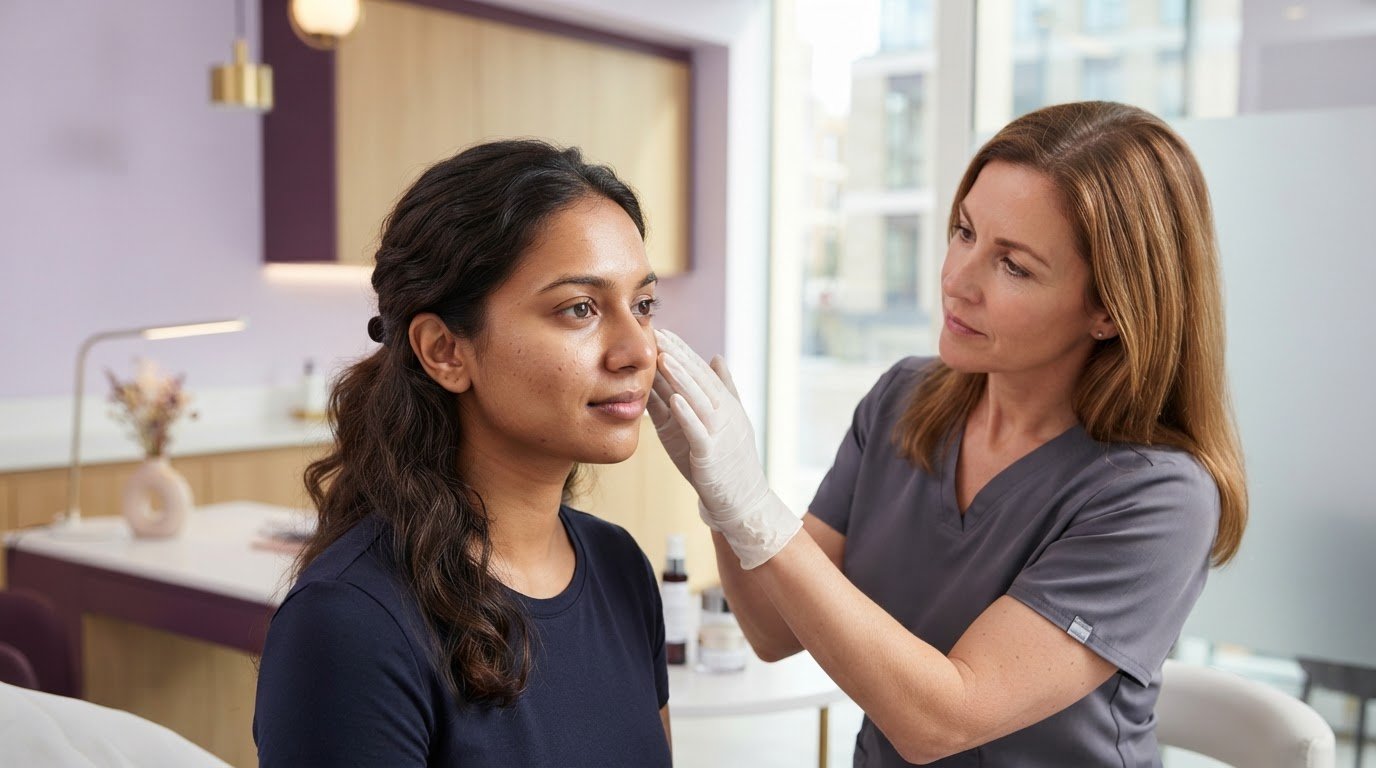
Bring up anything that could help build a clear picture of your skin, including products you use, past treatments and what has caused irritation before. Disclose your current skincare products and recent skin treatments during assessment. This helps the practitioner consider your routine and treatment history together, rather than relying on a broad skin-type category. Don’t stop prescribed skincare unless the professional who prescribed it advises you to do so.
It’s also helpful to explain your comfort preferences and any upcoming plans that might make temporary redness or sensitivity inconvenient. If your skin is visibly irritated on the day, or you’re experiencing a flare-up, discuss this before proceeding. A personalised assessment can help determine whether to go ahead, adapt the approach or postpone treatment.
Preparation, aftercare and when to seek advice
Before your appointment, follow any preparation instructions provided by the practitioner and arrive ready to discuss your current routine. There isn’t one preparation plan that applies to every person or protocol. After treatment, follow the specific aftercare guidance you’re given, including advice about skincare and sun exposure. Avoid adding new active products or extra exfoliation unless your practitioner says they’re suitable for your skin at that time.
Some temporary sensitivity or redness may occur after exfoliating facials, but the response and recovery can vary. Ask what to expect for the treatment proposed and what to do if your skin feels uncomfortable. If a reaction is persistent, unexpected or worsening, seek professional advice rather than trying to manage it by adding more products. If you have a diagnosed skin condition or are unsure whether a reaction is normal, raise this promptly with an appropriate healthcare professional.
For a calm, personalised discussion about HydraFacial and your skin goals, arrange an assessment with Nefretiti Laser Clinic & Aesthetics in Elm Park, Hornchurch.
Choosing a local HydraFacial or microdermabrasion consultation in Hornchurch
Reading about HydraFacial vs microdermabrasion can help you understand the difference, but a conversation about your own skin is the next step in judging suitability. Nefretiti Laser Clinic & Aesthetics is based in Elm Park, Hornchurch, Essex, and offers HydraFacial. A consultation gives you space to explain what you’d like to address and discuss your options without assuming one facial is right for everyone.
What a personalised consultation can clarify
Your discussion can focus on your skin goals, treatment preferences and relevant history. You might describe wanting a more hydrated feel, ask how surface exfoliation works or explain that you’re concerned about sensitivity. Sharing recent procedures, current skincare and any known skin conditions helps the practitioner consider whether HydraFacial may be suitable. The consultation is also an opportunity to discuss comfort, possible temporary reactions and realistic expectations.
Nefretiti Laser Clinic & Aesthetics offers a private, calm environment and a personalised approach. New clients can access a free consultation and patch test. These support an informed discussion, but don’t guarantee that a treatment will be suitable; this depends on an individual assessment. A patch test is not a substitute for discussing your skin history and concerns.
Local next steps for Elm Park and nearby areas
The clinic welcomes clients from Hornchurch, Elm Park, Romford, Upminster, Rainham, Gidea Park and across Essex. Readers in Dagenham, Harold Wood and Harold Hill researching facial options can use this comparison to prepare questions for a skin consultation. If you’re considering HydraFacial, read about the HydraFacial treatment in Hornchurch. Bring your questions and describe what matters most to you, such as the treatment experience, how your skin may respond or whether exfoliation is appropriate at this time.
There’s no need to arrive with a firm decision. A useful consultation should help you understand the differences, raise any relevant suitability concerns and agree on realistic expectations before deciding how to proceed. If active irritation or a recent procedure is part of your situation, mention it before treatment so it can be considered as part of the discussion.
If you’re in Elm Park, Hornchurch or elsewhere across Essex, you’re welcome to arrange a consultation with Nefretiti Laser Clinic & Aesthetics. Take the next step when you feel ready.
Take the next step towards a considered skin choice
The most useful outcome of comparing HydraFacial vs microdermabrasion is knowing what to ask about your own skin. Before deciding, note your main concern, what you hope a facial will feel like and any recent changes in your skincare or skin condition. These details can make a consultation more focused and help you understand the options without pressure to choose a treatment straight away.
At Nefretiti Laser Clinic & Aesthetics, the conversation can centre on your goals, comfort and suitability. Results vary, so a clear discussion about realistic expectations is just as valuable as choosing a treatment. You deserve to feel informed and comfortable with the next step.
Take your time, ask what matters to you and book a free consultation with Nefretiti Laser Clinic & Aesthetics to discuss HydraFacial and your skin goals.
Frequently Asked Questions
Is HydraFacial better than microdermabrasion for sensitive skin?
There’s no single answer based on the word “sensitive” alone. If your skin reacts to particular ingredients, fragrances or exfoliating products, note which ones and what happened. That can help a practitioner discuss the products and approach being considered. A general skin-type label doesn’t reveal every trigger, so details of your own experiences are more useful than choosing a facial based on a label.
Can HydraFacial and microdermabrasion be combined in one appointment?
They shouldn’t be combined by default. Both involve exfoliation, and adding treatments together may be excessive for some people. The practitioner would need to consider the proposed protocol and your skin’s response before advising whether a combination or separate appointments make sense. If you’re interested in both, raise that preference during treatment planning rather than arranging two exfoliating treatments independently on the same day.
How often can you have a HydraFacial or microdermabrasion treatment?
There isn’t a universal schedule to follow. Your practitioner can recommend an interval based on the specific treatment and how your skin responded to the previous session. Keep a brief note of when you had the facial and any changes you noticed afterwards. This can make it easier to discuss whether another appointment is appropriate, rather than relying on someone else’s routine.
What should I avoid before a HydraFacial or microdermabrasion appointment?
Don’t add a new scrub, at-home peel or strong active product just to prepare your skin. Follow the instructions provided for your appointment, as preparation can depend on the planned treatment. If you’re unsure whether a product or recent facial matters, mention it beforehand. Don’t pause prescribed skincare on your own; ask the professional who prescribed it for advice.
Can I use retinol after HydraFacial or microdermabrasion?
Wait for specific advice before restarting retinol, particularly if your skin feels uncomfortable after treatment. The right timing can depend on the treatment and your skin’s response, so a fixed rule may not suit everyone. If retinol is prescribed, check with the prescriber before changing your routine. Avoid combining it with additional exfoliating products until you’ve received guidance for your skin.
Which treatment should I choose before a special event?
For an event, consider a facial you’ve had before and know how your skin responds to, rather than trying a new approach at the last minute. Tell the practitioner the event date and whether you’ve previously had either treatment. They can discuss timing and possible temporary changes to your skin, but can’t promise a particular appearance for a specific occasion.
Where can I book a HydraFacial consultation in Hornchurch?
You can book a HydraFacial consultation with Nefretiti Laser Clinic & Aesthetics in Elm Park, Hornchurch. Use the online booking page to arrange an appointment. If you’re comparing treatments, raise your questions when booking so they can be included in the appointment discussion.

Comments