


What to Expect After Microneedling: Recovery, Aftercare and Results
Will your skin look red and feel tender after microneedling? A flushed, tight or sensitive feeling can be part of the early recovery, and mild flaking may follow. Knowing what to expect after microneedling can make these changes less worrying and help you avoid skincare that is too harsh for freshly treated skin.
It’s natural to wonder whether redness, warmth or dryness is normal, how long to simplify your routine, and when a change needs professional attention. Recovery varies, so your practitioner’s personalised aftercare guidance should take priority over general advice.
This guide covers common recovery stages, practical aftercare, activities and products to avoid while your skin settles, and how results may develop gradually. It also explains which signs may need prompt advice, so you know when to speak with a professional rather than trying to treat a concern yourself.
Nefretiti Laser Clinic & Aesthetics in Elm Park, Hornchurch, provides microneedling. New clients can have a free consultation and patch test to discuss the treatment, their suitability and the aftercare involved.
Table of Contents
What to Expect Immediately After Microneedling
There isn’t one appearance that defines a normal recovery. Redness, warmth, tightness or tenderness may occur, but not everyone experiences all of these, and their intensity can differ. Mild swelling or pinpoint marks are also possible. A mirror check alone can’t establish whether your skin is healing as expected, so compare any changes with the personalised aftercare instructions from your practitioner.
Post-treatment redness is a possible temporary response in which the skin looks flushed after microneedling. It may resemble mild sunburn, but the degree of redness and how it feels vary between people. Redness, warmth or sensitivity alone doesn’t confirm either a particular result or a problem.
How skin may look and feel straight after treatment
Your skin may look pink or red and feel warm, tight, tender or more sensitive than usual. Some people notice a little puffiness or pinpoint marks, whilst others see less obvious changes. These reactions don’t occur in the same combination for everyone, and their presence or absence isn’t a reliable way to judge treatment success.
Redness: Your skin may appear flushed, with the visible intensity varying between individuals.
Warmth or sensitivity: The treated area may feel warmer or more delicate to touch.
Tightness or tenderness: Skin can feel taut or mildly sore rather than comfortable as usual.
Mild swelling: A little puffiness is possible, but it isn’t universal.
Notice how your skin feels as well as how it looks. If a reaction feels unexpected or causes concern, use the advice provided by your practitioner rather than trying to diagnose it from appearance or comparing it with someone else’s recovery.
Why recovery can differ from person to person
Skin has its own baseline sensitivity and may respond differently from someone else’s. The treatment approach, including how it is tailored to your skin, can also influence what you notice immediately afterwards. A fixed description of how everyone should look straight after treatment can therefore be misleading. Your practitioner’s individual instructions are the most relevant guide.
General information can help set expectations, but it can’t predict precisely how your skin will look. Your practitioner can explain the approach for your session and the aftercare they recommend. Follow those instructions even if your skin looks calmer or more noticeable than you expected, and avoid changing your routine based solely on appearance.
At Nefretiti Laser Clinic & Aesthetics in Elm Park, Hornchurch, a personalised consultation helps you discuss the treatment approach and the care recommended for your skin before proceeding.
Microneedling Recovery: What Changes May Happen Over Time
Recovery is best understood as a general pattern, not a fixed calendar. The stages below are a guide, not a promise: your skin may settle sooner or take longer, and your practitioner’s instructions should remain your main reference. A short-term change in appearance is also different from the gradual changes that may follow treatment.
Visible recovery and longer-term skin changes don’t follow identical timelines. Redness or sensitivity may ease as the surface settles, whilst any treatment-related improvements can take longer to assess.
The first stage: visible redness and sensitivity
During the first day or two, redness, warmth or sensitivity may be noticeable. An NHS patient leaflet notes that redness often improves after one to two days, while tightness or soreness may last one to three days. These are general guideposts, not deadlines: your own skin may follow a different pattern.
If your skin looks less red than expected, or the sensitivity is more noticeable, neither difference alone confirms a problem or a successful result. Follow the aftercare advice provided for your session. If your experience differs from what you were told to expect, or you’re unsure how a change is progressing, contact your treating practitioner for personalised guidance.
As the skin settles: dryness, flaking and texture
Some people notice dryness or light flaking as the skin settles over the following days; others may not. Peeling isn’t inevitable, so don’t try to make it happen or use it as a measure of how well treatment has worked. Avoid picking, scratching or forcefully removing loose skin, as this can irritate the area. Follow your practitioner’s advice rather than adding exfoliation to speed things up.
This approximate timeline can help you make sense of changes without expecting your skin to match someone else’s experience:
First 24-48 hours: Redness, warmth and sensitivity may be most noticeable, then begin to ease for some people.
Following days: Dryness or light flaking may occur, but isn’t universal. Let any loose skin shed naturally.
By around the end of the first week: Many people find early visible dryness and redness have settled, although this timing can vary.
Following weeks: Longer-term skin changes may emerge gradually and should be assessed separately from the initial recovery.
These stages are approximate, not a checklist. If redness, discomfort or another change is worsening, persists beyond the guidance you were given, or concerns you, seek professional advice instead of trying to diagnose it yourself. A clinician can consider your treatment and individual circumstances.
For readers considering microneedling, a personalised consultation can help set realistic expectations about recovery and aftercare. You can book a microneedling consultation with Nefretiti Laser Clinic & Aesthetics in Elm Park, Hornchurch.
Microneedling Aftercare: Protect Your Skin While It Settles
A calm, simple routine is usually easier to follow than a shelf full of new products. After microneedling, prioritise clean hands, gentle skincare and the specific instructions your practitioner gave you. Your skin may feel more sensitive than usual, so avoid experimenting or treating each visible change with a different product. If general guidance differs from your personalised plan, follow the plan for your treatment.
Use this sequence as a practical starting point. It isn’t a replacement for your practitioner’s advice, which may be tailored to your skin and treatment approach.
Wash your hands before touching your face. Keep contact with the treated area to a minimum, and avoid picking or scratching.
Cleanse gently when advised. Use the cleansing approach recommended by your practitioner, and pat the skin dry rather than rubbing it.
Keep products simple. Use only products recommended for your aftercare. Avoid scrubs or introducing potentially irritating products whilst the skin feels sensitive.
Protect your skin from the sun. Avoid direct sun exposure during the initial recovery period. Once appropriate for your skin, use broad-spectrum sunscreen of at least SPF 30 as advised by your practitioner, and continue sensible sun protection afterwards.
Check before returning to usual activities or products. Ask your practitioner about makeup, active skincare, exercise, heat exposure and swimming, as advice can depend on your treatment and how your skin is settling.
Keep skincare gentle and avoid irritating the treated area
Resist the urge to exfoliate dryness or flaking, even if the texture feels uneven. Don’t scrub or try to remove loose skin; let it settle naturally. Products containing exfoliating acids, retinoids or other strong actives may irritate sensitive skin, so ask your practitioner when and how to reintroduce anything you normally use. There’s no single restart date that suits everyone.
Makeup advice also depends on your treatment plan and products. Rather than relying on a general online timetable, ask when it’s appropriate for your skin and how to apply or remove it gently. If a product stings or discomfort increases, stop using it and seek guidance.
Plan exercise, heat and everyday activities thoughtfully
Exercise, sweating, saunas, steam rooms, hot showers and swimming are all worth discussing before your session. Your practitioner can advise what to pause and when to resume, based on your treatment and skin response. Don’t assume a time limit shared online applies to you. If an activity leaves the treated area increasingly uncomfortable, stop and ask for advice.
If you’re unsure what to expect after microneedling or how to adapt your routine, Nefretiti Laser Clinic & Aesthetics provides personalised microneedling guidance in Elm Park, Hornchurch. Discuss suitable aftercare for your skin when arranging an appointment.
When Should You Seek Advice After Microneedling?
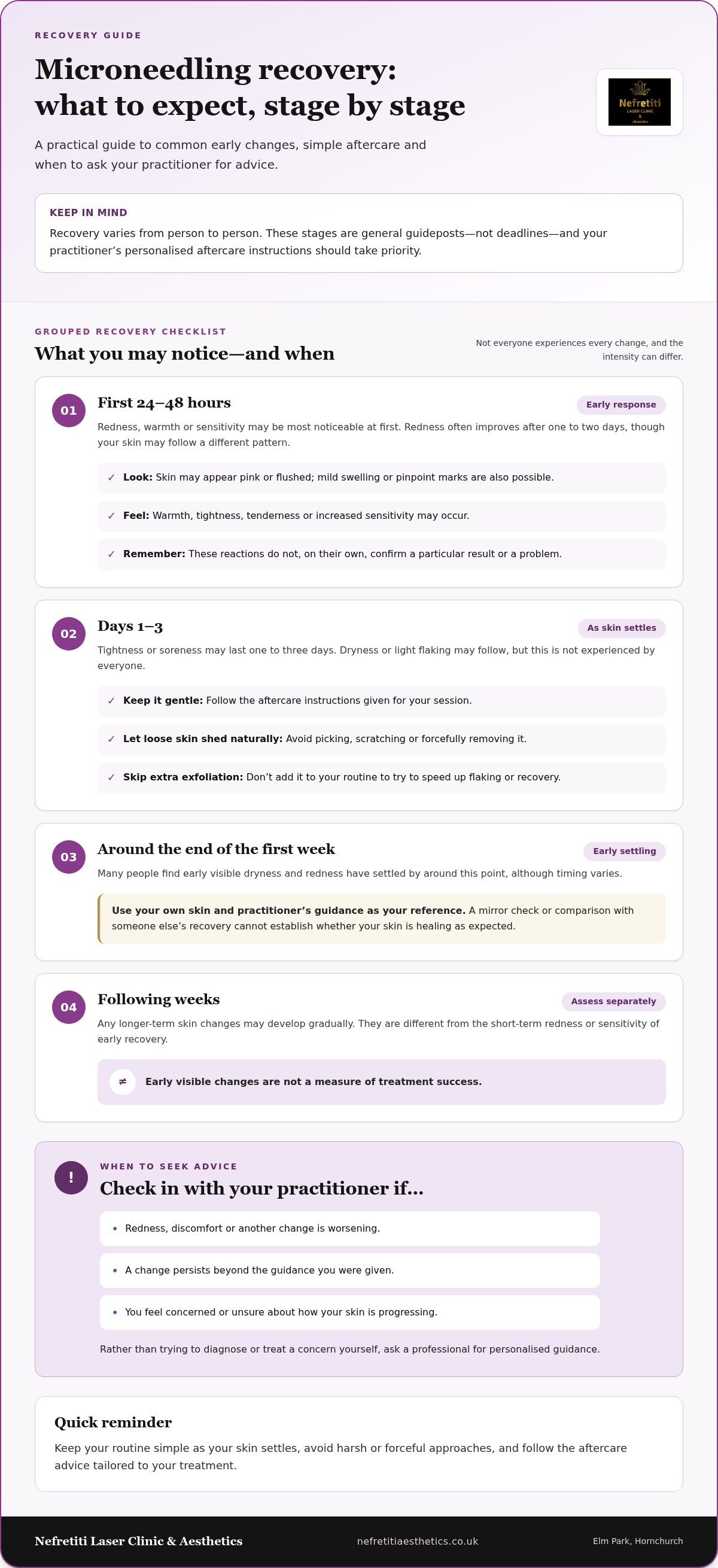
Some redness, sensitivity or mild discomfort can occur after microneedling, but an article can’t tell you whether a particular reaction is normal for your skin. Pay attention to how symptoms change, not only how the area looks at one moment. A reaction that is worsening, unexpected or causing concern deserves personalised advice.
Seek personalised advice if symptoms are getting worse rather than settling, or if you’re concerned about a change after microneedling. You don’t need to wait until you’re certain something is wrong before contacting your treating clinic.
Which changes may warrant professional assessment?
Contact the practitioner who carried out your treatment promptly if you notice increasing pain, redness that is spreading, discharge or pus, blistering, or significant swelling. These signs don’t prove a particular complication, but they shouldn’t be dismissed or self-diagnosed. An NHS Foundation Trust’s patient guidance notes that infection is a small risk after microneedling.
Also seek advice if a reaction is becoming more uncomfortable, differs from the aftercare guidance you received, or simply doesn’t feel right to you. Your skin, treatment approach and health history all matter when assessing a concern. Photos may help you explain how the area has changed, but they can’t replace a professional assessment.
How to get help without delaying care
For a non-urgent concern, use the aftercare contact route provided by the clinic that treated you. Explain when the treatment took place, what has changed and whether symptoms are improving or worsening. Follow any advice you receive, and don’t apply additional products or try to treat a concerning reaction yourself unless a clinician recommends it.
If you need urgent advice and can’t reach the treating clinic, contact NHS 111. For severe symptoms, such as difficulty breathing or sudden swelling of the lips, tongue or throat, call 999 or go to A&E. These symptoms need emergency assessment. Don’t delay seeking urgent care to wait for a reply from the clinic.
It’s understandable to feel unsure, especially if your skin looks different from what you expected. If symptoms are worsening or concerning, seek advice early rather than relying on online comparisons. Nefretiti Laser Clinic & Aesthetics provides microneedling in Elm Park, Hornchurch, and can offer personalised guidance about recovery and next steps.
Microneedling Results and Personalised Support in Elm Park, Hornchurch
Initial recovery and the time needed to assess possible results are separate. Microneedling prompts the skin’s natural repair response, so any changes may develop gradually. The treatment may help improve the appearance of skin texture for some people, but outcomes and timing vary. Your skin goals, starting point and suitability all matter, and no particular result can be promised.
What to understand about microneedling results
Discuss what you hope to address with your practitioner, who can explain what may be realistic for your skin. Treatment may not be suitable if you have an active skin infection, including cold sores, active skin cancer or recent tanning. A history of keloid scarring or certain inflammatory skin conditions, such as rosacea, may also increase the risk of complications and needs professional assessment. Share relevant health and skin history before treatment.
Your practitioner should guide preparation. Tell them about current skin concerns, recent sun exposure and any medicines or products you use, then follow their instructions before your appointment. Treatment intervals are individual; Chelsea and Westminster Hospital NHS Foundation Trust advises that sessions are normally spaced at least six weeks apart. Your practitioner can discuss whether a course is appropriate for you.
Discussing microneedling with a local clinic
Nefretiti Laser Clinic & Aesthetics provides microneedling in Elm Park, Hornchurch, Essex. New clients can have a free consultation and patch test. Use this time to discuss your skin history, suitability, preparation and aftercare, and to ask how progress may be reviewed. A personalised assessment can help you make an informed decision before proceeding.
If you’re exploring advanced skin treatments in Hornchurch, take time to understand the options and care involved. Your practitioner can talk through whether microneedling may be appropriate for your circumstances and what a tailored plan could involve.
Nefretiti Laser Clinic & Aesthetics welcomes clients from Hornchurch and Elm Park, as well as Romford, Upminster, Rainham, Dagenham, Gidea Park, Harold Wood, Harold Hill and across Essex. A consultation in the clinic’s calm, private setting gives you the opportunity to discuss your skin goals and questions.
Take the Next Step With Confidence
Understanding what to expect after microneedling can help you feel prepared, but your skin goals and circumstances deserve individual consideration. Before deciding, think about what you’d like to discuss: whether treatment may be suitable, what changes are realistic for your skin and what personalised care would involve. A thoughtful conversation can help you make an informed decision, without pressure to proceed before you’re ready.
If you’re considering microneedling, Nefretiti Laser Clinic & Aesthetics offers a calm, private setting in Elm Park, Hornchurch. Bring your questions and talk through your priorities with the team, so you can take the next step with greater clarity.
Feeling informed is a positive place to begin. Take your time, ask what matters to you and choose the path that supports your confidence and skin wellbeing.
Frequently Asked Questions
Is redness normal after microneedling?
Redness can occur after microneedling, though its appearance and intensity vary between people. It should gradually settle, but there’s no guaranteed timeframe that applies to everyone. Follow the aftercare instructions given for your treatment, and avoid judging recovery by comparing your skin with someone else’s. If redness becomes more pronounced, spreads or causes concern, contact your treating practitioner for personalised advice.
Can I wear makeup after microneedling?
When you can wear makeup depends on the treatment and your practitioner’s instructions. If your skin still feels sensitive, avoid applying products unless your practitioner has advised otherwise. If you have an event planned, ask about makeup before your appointment so you can plan comfortably. Don’t rely on a universal waiting period, as your skin’s response and aftercare plan are individual.
Can I exercise after microneedling?
Activity advice can depend on your treatment and how your skin responds. Ask your practitioner specifically about strenuous exercise, particularly if your routine involves heavy sweating or heat. If your face feels warm or tender, consider taking it easy until you’ve checked your instructions rather than pushing through discomfort. Follow the personalised aftercare plan, and contact the clinic if activity seems to make symptoms worse.
How soon can I wash my face after microneedling?
Follow the clinic’s specific instructions for when and how to wash your face, as there isn’t one start time that suits every treatment plan. When washing is appropriate, use clean hands and handle the treated area gently. Avoid scrubbing or exfoliating, and don’t add an unverified cleanser or product to your routine. If you’re unsure what to use, ask your practitioner before washing.
What happens if my skin flakes after microneedling?
Dryness or light flaking may happen as your skin settles, but it isn’t inevitable. Leave loose skin alone rather than picking, peeling or rubbing it away, as this can cause further irritation. Keep following your aftercare instructions. If flaking becomes more pronounced, persists beyond the advice you received, or occurs alongside increasing discomfort, spreading redness or discharge, contact your practitioner for an individual assessment.
When will I see results after microneedling?
Any visible changes may develop gradually, so the time needed to assess results is different from the early recovery period. What to expect after microneedling includes a settling phase and a separate period for noticing possible skin changes. Timing and outcomes vary, and no particular result can be guaranteed. Discuss your goals, suitability and realistic expectations with a practitioner before deciding on treatment.
Can I go in the sun after microneedling?
Recently treated skin may feel sensitive, so follow your practitioner’s advice about sun exposure and protection. Ask what precautions are appropriate for your skin and when to use sunscreen. If you’ll be outdoors, plan ahead rather than assuming your usual routine is suitable straight away. Should sun exposure be followed by a concerning reaction, seek professional guidance instead of trying to treat the area with new products.
Comments